Spring common bean plastic film mulching cultivation technology brings a big harvest
Growing common beans has the characteristics of a short production cycle, low input, and savings in labor and effort. After the common bean harvest, the next crop can be corn, peanuts, grain and oil crops, or other vegetables. Common bean yield is around 1500 kg per mu, and the growing benefit is outstanding. Below is an introduction to the key cultivation points for spring common beans under plastic film.
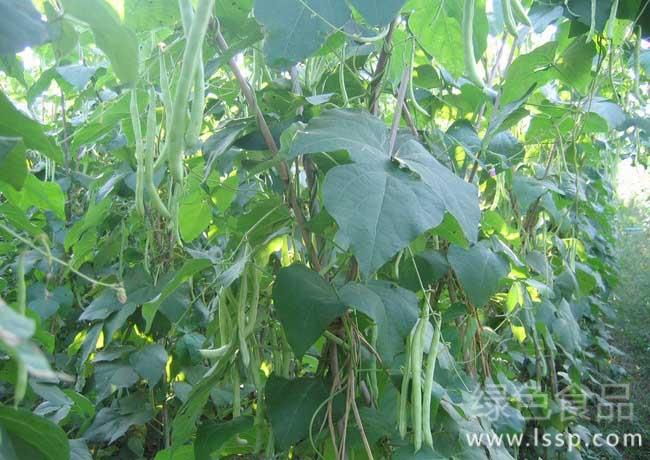
Common bean
I. Fertilizing and land preparation
For planting common beans, soil with medium fertility should be chosen, and per mu, 5000 kg of decomposed farmyard manure and 50 kg of nitrogen-phosphorus-potassium compound fertilizer should be applied as base fertilizer. Combine fertilization with plowing and bed making; the bed height is 20 cm and the width is 50 cm, and a horizontal line is marked with soil every 3 m. Choose sunny and windless weather for covering with plastic film, use plastic film 1 m wide, and after covering, press both sides firmly with soil to prevent damage by strong wind.
II. Sowing at the right time
When the temperature remains stable at 10°C for 5 consecutive days, common beans can be sown. In northern regions, if plastic film mulching cultivation is used, sowing can be advanced to early April; in southern regions, it can be advanced to early to mid-March. Choose common bean varieties with strong disease resistance and good yield performance, such as Didouwang, and the sowing rate is 6-7.5 kg per mu. Use a hole punch to make holes for sowing, with a sowing depth of about 3 cm, a hole spacing of 30 cm, 3-4 seeds per hole, two rows per bed, and a row spacing of 20 cm.
III. Field management
After the seedlings emerge, press the plastic film around the common bean seedlings firmly with soil to prevent it from being torn by strong wind. After rainy days, if water accumulates on the film, remove it promptly, and damaged film should be promptly covered with soil or replaced with new film. When the bean seedlings grow to 3-4 true leaves, water for the first time, and along with the water, apply 15 kg of nitrogen-potassium fertilizer per mu. After entering May and the peak pod-setting stage of common beans, apply topdressing once, with 20 kg of urea per mu. Common beans have relatively strong resistance to diseases and generally do not need much chemical control. During the harvest period, if pests such as aphids are found, imidacloprid and similar products can be sprayed for control.
IV. Timely harvest
From flowering of common beans to pod harvest generally takes about one week. Spring common beans under plastic film generally enter the harvest period in early May. At this time, it is exactly the peak season for market demand for common beans, with large consumption and relatively high prices, so harvest can be appropriately advanced.