Master the growth habits of Houttuynia cordata and cultivate high-yield, high-quality Houttuynia cordata
Houttuynia cordata is cold in nature, pungent and bitter in taste, and has antibacterial, antiviral, heat-clearing and detoxifying effects. It is used both as medicine and food and offers high returns.
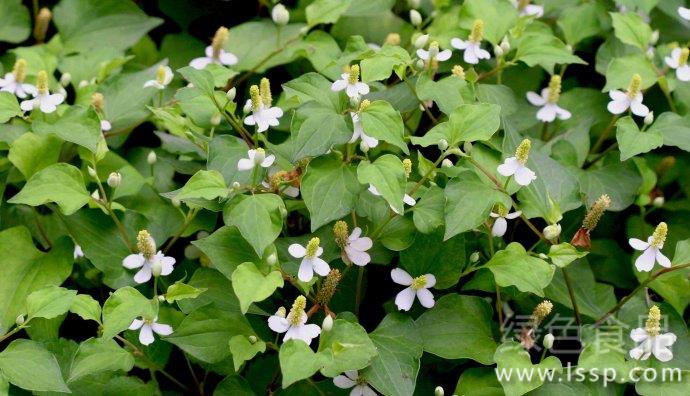
Houttuynia cordata
1. Growth habits and environmental requirements of Houttuynia cordata.Houttuynia cordata prefers a warm and humid climate and is intolerant of drought. Its underground stems overwinter and will not freeze to death at -10~0°C. The underground stems grow and can sprout when the temperature is 12°C. The early growth stage requires 16~20°C, and the underground stem maturation stage requires 20~25°C. Houttuynia cordata likes moisture and tolerates waterlogging, requiring moist soil with a water-holding capacity of 75% to 80%. The soil should be slightly acidic, pH 6~7, with fertile sandy loam and humus loam being best. Fertilization should be mainly nitrogen fertilizer, with appropriate application of phosphorus and potassium fertilizer. In soil rich in organic matter, the underground stems of Houttuynia cordata grow thick and strong.
2. Land selection and bed preparation.Choose a plot with loose, fertile soil and convenient drainage and irrigation. If using paddy fields, plow and sun the field in winter, apply 2000~4000 kg of decomposed organic fertilizer and 25 kg of compound fertilizer per 667 sq m, till and level the soil, and make beds 1.3~1.5 m wide and 30 cm high, with the length determined by the terrain. The distance between furrows should be controlled at 30~40 cm, and planting should be done on the bed surface.
3. Planting.Houttuynia cordata is mostly propagated by division of roots, but it can also be propagated by seed. Planting can be done in spring or autumn, but spring is better. Hole planting or strip planting can be used. Fill the holes or furrows with organic fertilizer, cover with 2~3 cm of fine soil, cut disease-free and sturdy underground stems of Houttuynia cordata into 4~6 cm short sections with 2~3 nodes, place the short sections flat in the planting holes or furrows with a plant spacing of 5~8 cm, then cover with about 5~6 cm of soil. If the soil is dry, spray water to settle the roots and keep the soil moist.
4. Fertilization.Fertilization for Houttuynia cordata is mainly nitrogen and potassium, with less phosphorus required, but it must not be lacking. When the seedlings emerge and are about 3 cm tall, the first topdressing can be applied. Use 1 part decomposed human feces and urine mixed with 4~5 parts water, plus 2% urea in the manure liquid, and water it on. When Houttuynia cordata enters the vigorous growth period, its fertilizer demand increases accordingly. On the basis of ensuring sufficient nitrogen fertilizer, apply phosphorus and potassium fertilizer in combination, especially potassium fertilizer, which is particularly important for the formation of the rhizomes of Houttuynia cordata.
Houttuynia cordata
5. Field management.Strengthen field management of Houttuynia cordata, carry out intertillage and weeding in combination with fertilization, keep the soil moist, water promptly in dry weather, drain promptly in the rainy season, weed and loosen the soil before the rows close, and combine promotion and control after the rows close. When the aboveground parts grow excessively, promptly pick the tender stems and leaves of Houttuynia cordata; when the aboveground stems and leaves turn yellow and become small, apply appropriate topdressing to promote tillering. If the Houttuynia cordata plants are not being kept for seed, remove flower buds promptly to avoid consuming too many nutrients.
6. Pest and disease control.Because of its fishy odor, Houttuynia cordata rarely suffers from insect pests, but diseases include southern blight and leaf spot. Control methods: ① choose reasonable crop rotation, preferably paddy-upland rotation; ② choose soil with convenient drainage and irrigation that is loose and fertile; ③ strictly select seed and remove diseased seed stems. ④ strengthen field management, drain promptly in the rainy season, and pay attention to irrigation in dry weather; ⑤ in the early stage of disease, choose thiophanate-methyl, chlorothalonil, mancozeb, etc. for spraying or root drenching.
7. Harvest for consumption throughout the year.Pick the tender stems and leaves of Houttuynia cordata in spring and summer, and dig the underground stems in autumn and winter. Cultivated Houttuynia cordata can be harvested 2~3 times for tender stems and leaves. One week after harvest, diluted human feces and urine or biogas slurry plus an appropriate amount of nitrogen-phosphorus-potassium compound fertilizer can be applied to Houttuynia cordata. When harvesting the underground stems of Houttuynia cordata, leave a portion or the cut ends, and when the temperature rises the following year, they will sprout and emerge. Promptly carry out management such as weeding, loosening the soil, thinning seedlings, and topdressing, and this can continue for many years.