Five Key Measures to Increase Greenhouse Vegetable Yields in Spring
In response to spring weather conditions such as frequent wind and large temperature differences between morning and evening, vegetable growers should grasp the following key measures for managing greenhouse vegetables.
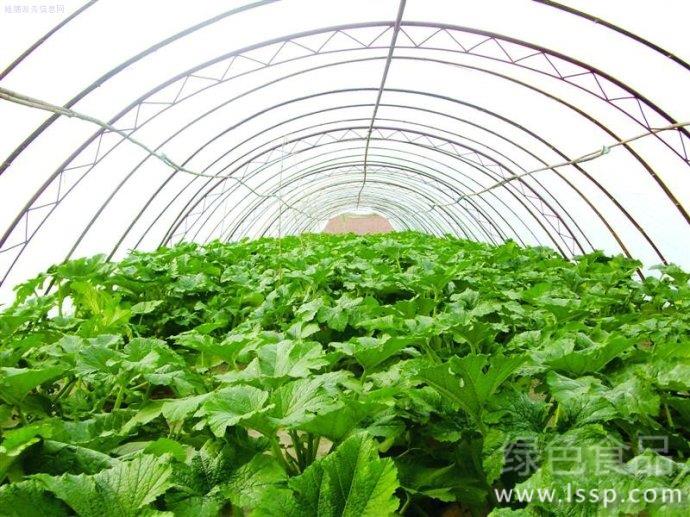
Greenhouse vegetables
1. Scientific temperature regulation.Focus on reasonable temperature control. Indoor temperatures should be regulated through reasonable ventilation. After 4 to 5 pm, before the outside temperature drops, cover with straw mats in time to ensure that the temperature inside the greenhouse is always maintained within the range suitable for vegetable growth. At noon, when the temperature inside the greenhouse is not high or when there is strong wind during the day, generally do not ventilate or ventilate only a little. When the lowest nighttime temperature can also reach above 15°C, no longer cover with straw mats, and ventilate day and night.
2. Scientific watering.The temperature difference between morning and evening is relatively large, and the ventilation volume of the greenhouse is small, so in management special attention should be paid to the timing, time, frequency and method of watering vegetables: (1) Watering method. For vegetables cultivated with plastic film mulching in the greenhouse, it is best to use subsurface irrigation under the film or drip irrigation. (2) Watering time. Watering should be done as much as possible on sunny mornings. (3) Watering amount. The amount of water for vegetables should be determined according to the weather at the time, the growth condition of the vegetables and the soil moisture. Generally, after watering, the greenhouse should be closed tightly to raise the indoor temperature, and after the soil temperature rises, the greenhouse should be opened in time for ventilation and dehumidification, which is beneficial to the healthy growth of vegetables and inhibits the occurrence of pests and diseases.
3. Improve lighting.First, extend the lighting time of vegetables as much as possible and increase light intensity. On the premise of ensuring the temperature inside the greenhouse, uncover straw mats early and cover them late every day as much as possible to extend the time vegetables are exposed to light in the greenhouse; second, maintain a reasonable vegetable population structure.
4. Timely topdressing.While appropriately increasing the number and amount of watering for vegetables, apply chemical fertilizer to vegetables once about every 7 days along with watering. For topdressing, strictly follow the principle of "small amounts and multiple applications," and appropriately increase the application amount of phosphorus and potassium fertilizers to improve the quality and stress resistance of vegetables.
5. Pest and disease control.As the temperature rises, pests and diseases of greenhouse vegetables will also occur commonly. For the control of various pests and diseases of vegetables, implement the vegetable protection policy of "prevention first, integrated control." Pay attention to selecting high-efficiency, low-toxicity, low-residue pesticides to control the occurrence and spread of vegetable pests and diseases.