Soybean pods that fail to fill affect yield: how to prevent and control this
Summer soybeans often develop the phenomenon of pods that fail to fill, and there are many causes, such as improper ratios of nitrogen, phosphorus and potassium fertilizer, varietal differences, excessive density, lack of trace elements, and damage from pests and diseases, all of which can prevent soybean seeds from swelling and result in blighted pods. Green Food Network suggests that to prevent summer soybean pods from failing to fill in production, you should start from the following aspects:
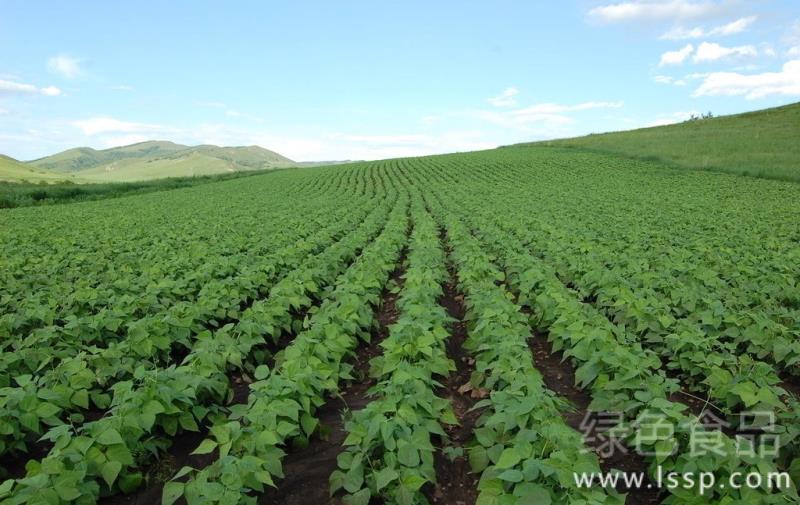
Soybean
1. Apply more organic fertilizer and phosphorus-potassium fertilizer to soybeans.Using nitrogen fertilizer alone tends to cause excessive vegetative growth, leading to pods that fail to fill. Be sure to apply a certain amount of organic fertilizer and three-element compound fertilizer as a top dressing to summer soybeans after emergence. For fields where soybean pods fail to fill severely, even more phosphorus-potassium fertilizer should be applied to reduce blighted pods.
2. Spray foliar fertilizer.Soybeans deficient in boron are very prone to pods that fail to fill. After the early flowering stage, soybeans should be sprayed once every 10 days with 0.1%—0.2% borax and 0.5%—1% urea solution, for 2—3 consecutive sprays; soybeans at full flowering stage should be sprayed with 0.2%—0.5% monopotassium phosphate, which can not only prevent soybean plants from fertilizer deficiency but also prevent blighted pods. Choose a windless cloudy day or a sunny afternoon to spray the foliar fertilizer, mainly spraying the undersides of the leaves.
3. Rational irrigation.If soybeans at the flowering, podding and seed-filling stage encounter insufficient soil moisture, drought and other conditions, they should be irrigated in time to prevent drought, so as to meet the water needs of soybeans at the seed-filling stage and reduce blighted pods.
4. Pay attention to the prevention and control of pests and diseases.From the seedling stage onward, attention must be paid to the occurrence of soybean aphids, and control must be carried out early. Soybeans at the flowering and podding stage require special attention to diseases and pests such as downy mildew, gray leaf spot, soybean pod borer, bean pod borer and clanis undulosa, to increase the pod-setting rate.
5. Crop rotation and changing stubble.Avoiding continuous cropping of soybeans can prevent nutrient imbalance in the soil, reduce the harm to soybeans from pests, diseases and weeds, and reduce the rate of empty and blighted pods.