Off-season cultivation techniques for cilantro in summer and autumn, achieving high yield and high efficiency
Off-season cultivation of cilantro brings high yields and good returns. Here we share the cilantro cultivation techniques with vegetable growers.
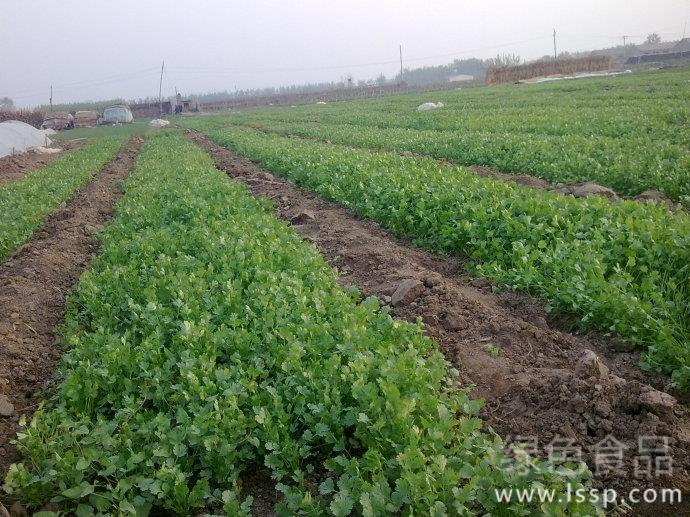
Cilantro
I. Variety selection.For off-season cultivation, cilantro varieties should be chosen that are tolerant to heat and humidity, disease-resistant, strongly stress-resistant, and of the large-plant, large-leaf type.
II. Seed treatment.Under high temperatures, cilantro seeds germinate with difficulty. Before sowing, soak the seeds in a 300-fold dilution of 1% carbendazim wettable powder for half an hour, then remove and rinse them clean. Next, soak the cilantro seeds in clean cold water for about 20 hours, then germinate them under a temperature of 20-25°C, and finally sow.
III. Land preparation and fertilisation.Choose a plot with convenient drainage and irrigation and loose, fertile soil for planting cilantro. After the previous crop is harvested, promptly plough the plot 20-25 cm deep and sun it for 15 days. Make deep-furrow high beds with a bed width of 120 cm, a height of 20 cm and a furrow width of 30 cm, so that shade netting can be used easily. The cilantro growing period is relatively short, so in conjunction with land preparation, apply 3500 kg of decomposed human excrement and urine, 150 kg of cake fertiliser and 50 kg of calcium-magnesium phosphate per mu as base fertiliser. The surface soil of the bed should be worked fine and level to facilitate uniform emergence.
IV. Timely sowing.Off-season cilantro is generally sown from mid-May to early July, using 1 kg of seed per mu. After uniform broadcasting, cover with 1-2 cm of straw matting. The purpose of covering with straw matting is to retain moisture and preserve soil moisture and promote seedling growth; remove it after 5-7 days, and during this period take care to maintain the soil moisture of the plot.
V. Field management.The high temperatures of summer and autumn affect cilantro growth, so after the straw matting is removed, shade netting should be promptly set up on frames and covered. Cover the shade netting during the day and remove it at night, and strengthen ventilation to prevent cilantro seedlings from growing spindly and to prevent disease. Because cilantro has a short growing period, it is advisable to weed early, thin seedlings early and apply quick-acting nitrogen fertiliser early. Thinning should generally be carried out about 7 days after full emergence, and seedlings should be finalised when there are 2 true leaves, with a seedling spacing of 2-3 cm. Usually water the cilantro about once every 8 days. When the cilantro seedlings are 3 cm tall, begin topdressing, applying 10-15 kg of urea and 250 g of boron fertiliser per mu. Afterwards, in conjunction with watering, apply 2-4 split topdressings of ammonium bicarbonate or urea, and in the later foliar fertiliser applications add an appropriate amount of monopotassium phosphate to promote leaf growth.
VI. Pest and disease control.1. Agricultural control: choose cilantro varieties with strong disease resistance, practise crop rotation and avoid continuous cropping. Remove diseased plants and diseased leaves from the field promptly. Strengthen fertiliser and water management to improve the disease resistance of cilantro. 2. Physical and biological control: frequency-vibration insect-killing lamps, sex pheromone lures, Bt powder, etc. 3. Chemical control: damping-off, viral disease, anthracnose and leaf spot are the main diseases of cilantro. Five days after emergence, spray once with a 800-fold dilution of 3% polyoxin, then spray once every 7 days with a 600-fold dilution of polyoxin, for a total of 2-3 sprays, which can prevent damping-off, anthracnose and leaf spot. To control viral disease, use insect-proof netting to prevent aphids from flying in; use shading to reduce the occurrence of aphids; and spray the foliage with 20 g of 20% imidacloprid wettable powder mixed with 50 kg of water to thoroughly control aphids. Use a 1500-fold dilution of 1% abamectin spray to control leafminers.
VII. Harvesting.Cilantro can be harvested about 40 days after sowing. 15 days before harvest, spray with gibberellin at a concentration of 20-25, which can make the leaves elongate, increase branching and give a high yield.