Five precautions for late-stage management of hybrid early rice; improper management affects yield
After hybrid early rice is transplanted, it often encounters rainy weather, so early growth is slow and the development period is delayed. If late-stage management is improper, it will inevitably affect yield and quality. In late-stage management of hybrid early rice, do a good job of five precautions.
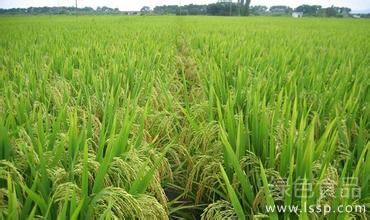
Early rice
First precaution: premature dehydration.Hybrid rice has a well-developed root system and luxuriant stems and leaves, with strong water and fertilizer uptake capacity. Especially after the booting stage of early rice, fertilizer and water supply must be guaranteed. After heading, the root system gradually ages. On the premise of ensuring sufficient fertilizer and water supply, increase soil aeration, alternate water and air, nourish roots with air, protect leaves with roots, and plump grains with leaves. Hybrid early rice has the advantage of large panicles and many grains, and has a secondary grain-filling process. From grain filling to the yellow-ripe stage of early rice, intermittent irrigation should be maintained, and water must not be cut off too early. Therefore, for water management, during the grain-filling stage keep it mainly moist, during the dough stage keep it mainly dry, and cut off water 5 to 7 days before harvest. Never cut off water too early.
Second precaution: excessive vegetative growth and late maturity.If in the late stage the flag leaves of early rice plants are found to be drooping and oversized, it may be excessive vegetative growth and late maturity. In addition to draining water and drying the field, for each mu of paddy field use 250 grams of rice vinegar, 1 kilogram of superphosphate, or 100 grams to 150 grams of potassium dihydrogen phosphate, add 50 kilograms of water, and spray on the leaves of early rice at the booting stage, initial heading stage, and grain-filling stage respectively, to promote upright flag leaves, improve photosynthetic efficiency, and increase the seed-setting rate and 1000-grain weight of early rice.
Third precaution: premature senescence.Some hybrid early rice fields do not have enough fertilizer; in some, the field-drying work has not been done well, with long-term irrigation, severe soil oxygen deficiency, affecting the root development of early rice. For these early rice fields, adopt the wet-dry irrigation method, dry the field in time at the stage when effective tillering of early rice ends, promote rooting and control tillering, and transform vegetative growth into reproductive growth, playing a role in rooting and strengthening stems. In addition, panicle and grain fertilizer should also be applied well. During the grain-filling period, for each 667 sq m of paddy field use 100 grams to 150 grams of potassium dihydrogen phosphate mixed with 50 kilograms of water, and spray on the leaves of early rice after 4 p.m., spraying once every two or three days, for a total of two or three sprays. This can prolong the lifespan of functional leaves of early rice, prevent premature senescence, and increase 1000-grain weight.
Fourth precaution: damage from diseases and insect pests.Hybrid early rice has dark green leaves and luxuriant growth. In the late stage, it is prone to damage from diseases and insect pests such as leaf roller, rice planthopper, sheath blight, bacterial leaf blight, and rice blast. Therefore, strengthen field inspection and observation to prevent diseases and insect pests. Especially after heading of early rice, prevent damage from rice planthopper and sheath blight. From the booting stage to the yellow-ripe stage, hybrid early rice is most vulnerable to damage from the third generation of rice planthopper. When each 100 hills of seedlings have 1000 to 1500 second- to third-instar nymphs, promptly use pesticides such as MIPC and fipronil for control.
Fifth precaution: harvesting while green.Hybrid early rice has a long growth period and is prone to the phenomenon of harvesting while green, affecting the yield and quality of hybrid early rice. To ensure a bumper harvest of both early and late rice, comprehensive measures should be taken rather than harvesting while green. Harvest hybrid early rice when the grains are golden yellow and fully mature. Harvest one field as soon as it is ripe, so as to harvest early rice at the right time without affecting the transplanting of late rice.