Sesame has a high fertilizer demand; how should fertilizer be applied skillfully during the flowering period?
Sesame requires a relatively large amount of fertilizer. For every 100 kg of sesame seeds produced, it needs to absorb 8-9 kg of pure nitrogen, 3 kg of phosphorus pentoxide, and 7 kg of potassium oxide. At present, sesame yield per mu is generally 40-60 kg, while high-yield fields generally produce 75-95 kg. In the early growth stage, sesame seedlings are weak, the root system is not well developed, and the ability to absorb fertilizer is weak. But when it enters the flowering and capsule-setting stage, when vegetative growth and reproductive growth proceed together, the sesame root system also enters a period of vigorous development, and the fertilizer requirement increases. If the sesame fertilizer requirement cannot be met at this stage, it will lead to short sesame plants, fewer flowers and pods, fewer seeds, and low yield.
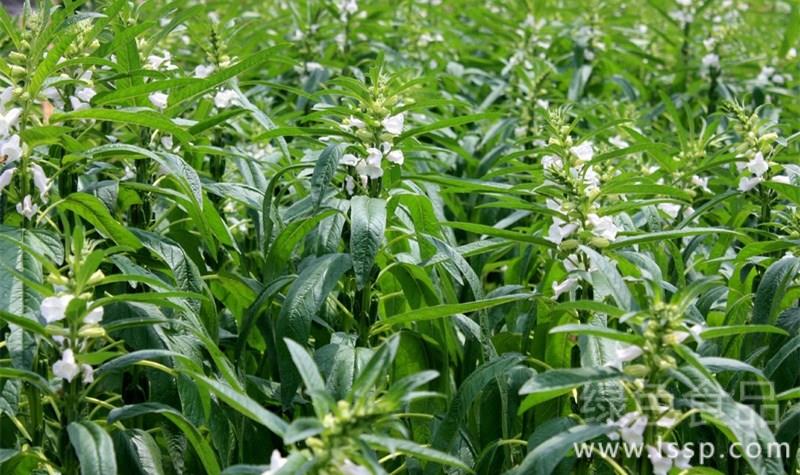
Sesame flowering period
Topdressing is a rapid fertilizer supplementation measure taken during the growth and development of sesame to make up for the insufficiency of base fertilizer and seed fertilizer. At different growth stages, the absorption and accumulation of nutrient elements by sesame differ. After budding and flowering, large amounts of elements are needed, but at this time the soil nutrient supply is insufficient, so skillfully applying topdressing promotes the growth of sesame stems and leaves, the differentiation and development of flower buds, and the formation of seeds. At the early flowering stage after budding, apply 15-20 kg of fertilizer per mu to sesame as topdressing. At the same time, use a mixed solution of 0.4% potassium dihydrogen phosphate and 0.2% borax for foliar spraying, once every 5-7 days, for 2 consecutive sprays. Note: vigorously growing sesame does not need application.
Sesame grows most vigorously, and the peak fertilizer demand period is the flowering and capsule-setting stage. During this period, the nutrients absorbed are about 70% of the total, and flower fertilizer must be increased. Practice has proved that skillfully applying flower fertilizer can increase sesame yield by more than 30%. The topdressing methods are soil application of sesame-specific fertilizer and root-zone spraying of phosphorus, potassium, and boron fertilizers. It is best to choose cloudy days or early morning and evening for fertilization. In addition, for sesame with insufficient fertility in the middle and late stages or showing signs of fertilizer deficiency, 1-2 foliar sprays can be applied as a supplement. Generally, 50 kg per mu of 0.2% potassium dihydrogen phosphate solution can be used to evenly spray the stems and leaves.