Early spring plastic-mulched potatoes enter the bulking stage: how to do a good job of late-stage management
After May, early spring plastic-mulched potatoes will successively enter the tuber bulking stage. During this stage, potatoes are quite sensitive to water and fertilizer, have relatively large demands, and pests and diseases occur frequently. Below is an introduction to the key technical points for late-stage management of early spring plastic-mulched potatoes.
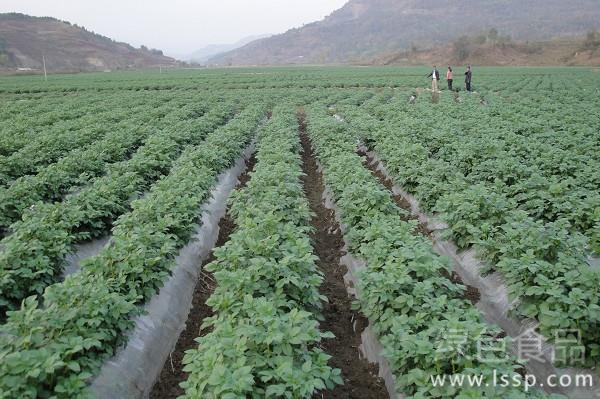
Potato
1. Removing the film and earthing up.When the stems and leaves of the aboveground part of early spring plastic-mulched potatoes reach a height of about 30 cm, around the time potatoes are in the bud stage, and the tubers begin to bulk up, and when the outside temperature stabilizes at about 25°C, the plastic film covering the ground should be removed promptly. After removing the plastic film, weeds between the ridges should be pulled out promptly, and soil should be earthed up around the potato roots twice. Earthing up can increase potato yield and prevent the occurrence of potato tuber green-skin disorder.
2. Watering and fertilizing.During the potato tuber bulking stage, a sufficient supply of water and fertilizer is needed. When potato tubers are the size of walnuts, fertilizer can be applied along with watering. Potatoes are a potassium-loving crop and have a large demand for potassium fertilizer. When watering, apply 20 kg of nitrogen-potassium fertilizer per mu, topdress once every 10 days, and topdress continuously twice. In case of continuous drought, attention should be paid to watering the potatoes promptly to prevent soil drought from affecting potato tuber bulking.
3. Controlling pests.When potatoes enter the late growth stage, the main pests include aphids and white grubs. Aphids harm leaves, suck the sap from potato leaves, and spread potato viral diseases, causing potato yield to be affected. A 10% imidacloprid 800-fold solution can be used for spray control, applied once every 7 days, for two consecutive applications. White grubs are a major soil-dwelling pest affecting potato yield, gnawing on potato tubers, causing reduced yield and poorer market quality, and affecting planting returns. The control method is to use phoxim for root irrigation, with a dosage of 1-1.5 kg per mu, applied around dusk in combination with watering for root irrigation, which can produce obvious control effects, increase potato yield and market quality, and raise planting benefits.