High-yield Cultivation Techniques for Adzuki Bean Sprouts, a Distinctive Sprout Vegetable
Adzuki bean sprouts have good quality and high nutritional value, and are deeply loved by people. So, how can adzuki bean sprouts be grown for high yield?
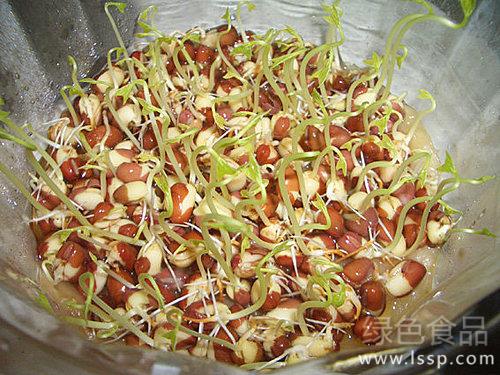
Adzuki bean sprouts
I. Cultivation equipment.In a dark, light-blocking indoor room or protected area, build a cultivation trough 100-120 cm wide and 20 cm deep with bricks. Lay plastic film that has been pre-punched with holes on the bottom of the trough so that excess water can drain out. Use vermiculite, perlite, river sand, etc. as the substrate.
II. Seed selection.Select new adzuki bean seeds that are plump, bright in color, white at the hilum, and have a germination rate above 95%. Remove shriveled, broken, insect-damaged beans and impurities, rinse with clean water, float off the shriveled grains, and wash the seeds clean.
III. Soaking and sprouting.Soak the adzuki bean seeds in clean water at about 20°C for 16-24 hours, changing the water 4 times. After soaking, wash off the mucus and dirt, wrap them in a wet cloth to sprout, and once the seeds show white sprouts they are ready for cultivation.
IV. Cultivation.The substrate should be 10 cm thick, and water it thoroughly. Then sow the sprouted adzuki bean seeds on top, sowing about 2 kg of adzuki beans per square meter, and cover the seeds with another 0.5 cm thick layer of substrate. Sprinkle water with a fine-hole watering can, and finally cover with plastic film. Generally do not water again before the seeds emerge. After two days, the adzuki bean sprouts will push the substrate open, and then remove the film.
V. Cultivation management.Keep the temperature at 16-30°C. Water 2-3 times a day. The water should be applied evenly and thoroughly, but there should be no standing water. Keep the air in the cultivation site fresh.
VI. Harvest.When the adzuki bean sprouts grow to 15 cm, the first pair of true leaves has not fully unfolded, and the tissue is tender and not fibrous, cut them off along the base of the stem.