Wheat spike number is already set, but grain number and grain weight can still change: how to do a good job of late-stage management
In the late growth stage of wheat, the spike number is already set, but the number of grains per spike and grain weight can still change if management is done properly. Therefore, doing a good job of late-stage management of wheat helps to achieve more grains and heavier grains and to increase wheat yield. The key late-stage management measures for wheat are as follows:
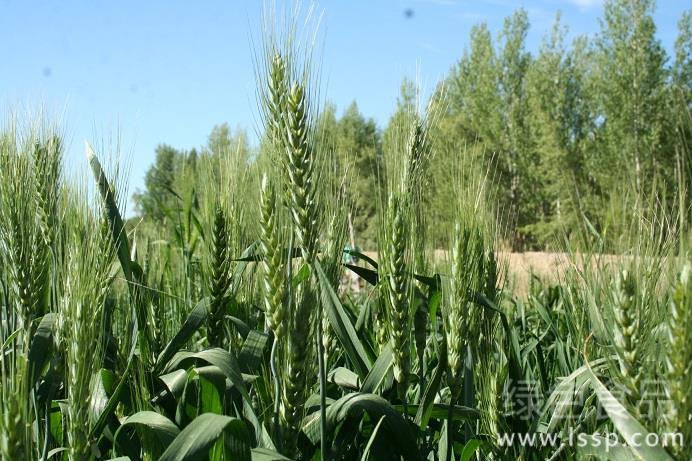
Wheat
1. Water at the right time. Wheat at the heading and grain-filling stage needs more water, and its water consumption accounts for 70% of the total water consumption of the whole growth period. Therefore, according to soil moisture conditions and the wheat growth status, water should be applied at the right time so that the soil moisture in the wheat field is kept at 65%-80% of the field maximum water-holding capacity. In some places, wheat-yellowing water, which has a certain effect on resisting dry hot winds, is also applied; the amount of water should be appropriate, and especially before maturity, wheat must not be flooded with large amounts of water, so as to avoid suffocation and rotting of the wheat root system, which can lead to premature wilting and forced ripening and reduce grain weight. In normal years, irrigation is generally stopped 10-15 days before wheat harvest.
2. Reasonable topdressing. For fields with poorer soil fertility where wheat leaves have tended to lose vigor and turn yellow around heading, no more than 5 kg of nitrogen fertilizer per mu can be applied as topdressing together with irrigation. In addition, foliar spraying of leaf fertilizers such as monopotassium phosphate and Fengchanling also has a good effect.
3. Control diseases and pests. In the late growth stage, wheat has many diseases and pests, which should be controlled in time. If there is banded sclerotial blight, use 4 liang of 5% Jinggangmycin aqueous solution per mu; if there is powdery mildew or rust, use 75 ml of 20% triadimefon emulsifiable concentrate per mu; to kill aphids, use 15 g of 10% imidacloprid wettable powder per mu; to control scab, when the flowering plant rate of wheat reaches 10%, use 3 liang of 40% carbendazim suspension concentrate per mu. For adult wheat blossom midges, use 50 ml of 50% phoxim emulsifiable concentrate or 25 ml of Huifeng cypermethrin emulsifiable concentrate per mu, add water and spray at conventional volume for control. All the above pesticides should be sprayed after the dew has dried on a sunny day, diluted with 50 kg of water; if rain occurs within 8 hours after spraying, re-spray in time.
4. Harvest at the right time.From grain filling to the late dough stage, when wheat grain weight reaches its highest point, it increases by about 1-2 grams per day. At the late dough stage, harvest in time. If harvest is too late, the grains dehydrate and harden, the glumes become loose, and the grains are easy to shed; the ear stems become brittle, and the ears are easy to drop; for varieties with a short after-ripening period, rain will cause sprouting.