Management Key Points for Soybeans Under Three Planting Methods at the Turn of Spring and Summer
In late spring and early summer, there is frequent overcast and rainy weather, and temperatures fluctuate considerably. Whether soybean fields are managed properly directly affects yield and quality. Today, the editors of Green Food Network will introduce to vegetable growers the growth stages of fresh-eating soybeans under different cultivation methods at the turn of spring and summer, as well as the management measures to be taken.
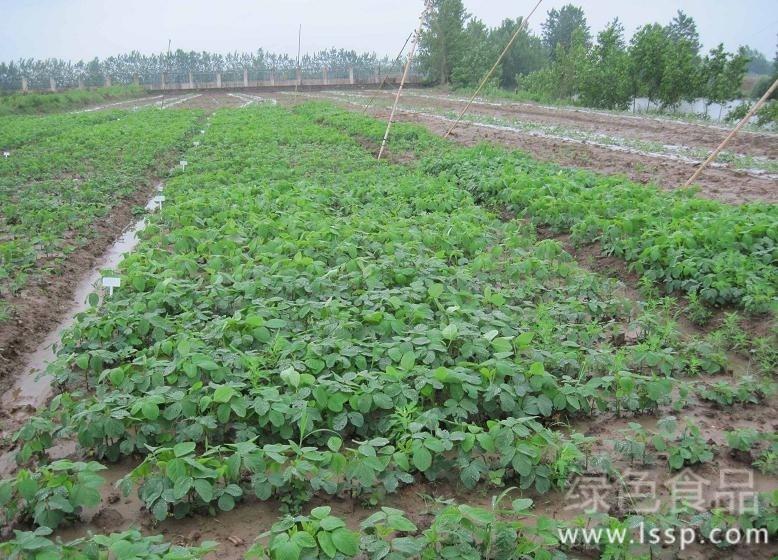
Open-field soybeans
Greenhouse soybeans.They are currently in the pod-setting and seed-filling stage. Soybeans in the pod-setting and seed-filling stage prefer cool conditions, but the temperature during the pod-setting stage must be at least above 15°C, while during the seed-filling stage they can tolerate low temperatures of 9°C. After entering the seed-filling stage, slightly lower temperatures favor the accumulation of dry matter. Therefore, for earlier-planted greenhouse soybeans already in the seed-filling stage, the greenhouse skirt film can be removed; for later-sown ones currently in the pod-setting stage, the skirt film can be rolled up during the day and lowered at night. Increased ventilation and light transmission raise the carbon dioxide concentration inside the greenhouse, which can promote seed filling and pod setting in soybeans and also prevent premature senescence of soybean plants caused by excessively high temperature and humidity and excessively low carbon dioxide concentration inside the greenhouse. Carry out water management properly according to field soil moisture.
Low-tunnel soybeans.They are in the flowering and pod-setting stage. Measures: 1) Apply soybean flower and pod fertilizer in a timely manner. Generally, only nitrogen fertilizer is applied, at 60% of the total nitrogen fertilizer amount, equivalent to about 14 kg of urea, applied by watering with water; half is applied at the early flowering stage, and the other half at the early pod-setting stage. 2) Field water management must be strengthened. Soybeans in the flowering and pod-setting stage consume relatively large amounts of water, so it is necessary both to meet the water needed for soybean growth and to prevent waterlogging damage. Ditch cleaning work must be done well to ensure smooth drainage and irrigation, with drainage as the main priority, to prevent excessively high humidity in the soybean field, which can cause flower and pod drop. Soil water-holding capacity is generally best kept at 70-80%. 3) Weed control. Soybean fields that have been given flower and pod fertilizer have sufficient nutrients, and with suitable temperatures, weeds tend to grow readily and compete with soybeans for nutrients, affecting soybean growth. Therefore, weeds must be removed in a timely manner, mainly by hand pulling.
Soybeans cultivated under plastic film mulching or in open fields.They are in the seedling stage. Ditch cleaning and drainage work must be done well to prevent water accumulation in the field. For soybeans showing nutrient deficiency symptoms such as pale leaves and weak growth, seedling fertilizer should be applied as appropriate, generally by watering with 2.5 kg of urea dissolved in water; for soybeans with dark green leaves and robust growth, seedling fertilizer may be omitted; for earlier-sown fresh-eating soybeans about to enter the flowering stage, if nutrient deficiency symptoms appear, flower fertilizer should be applied in advance, and the fertilizer amount may be appropriately increased; for open-field soybeans, timely intertillage and hilling should be carried out, and weeds should be removed.