Key management points for greenhouse vegetables in early summer: harvesting winter-spring vegetables and planting summer vegetables
As summer approaches, greenhouse vegetables of the winter-spring crop have entered the late growth stage, and vegetables of the overwintering-summer crop can also be planted. How should corresponding vegetable management measures be taken according to temperature changes? The editor believes this should be grasped from the following four aspects:
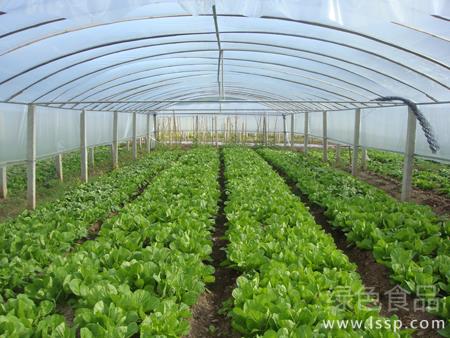
Greenhouse vegetables
I. Adjust the greenhouse film and control temperature reasonably.When the minimum temperature stabilizes above 15°C, the straw curtains of the winter-warm greenhouse should be removed in time or no longer covered at night, so as to avoid excessive night temperature causing vegetables to consume large amounts of nutrients and resulting in poor flowering and fruit setting. As the temperature rises, increase the duration and volume of top ventilation. When top ventilation alone is difficult to control, open the ventilation openings at the front face of the greenhouse, and take appropriate shading and cooling measures to ensure normal growth of greenhouse vegetables.
For arched sheds, these three methods can be used to regulate the greenhouse environment: First, keep the top film unchanged and remove the skirt film. The upper top film blocks rain, while the lower part ventilates and removes moisture. Second, keep the top film unchanged, remove the skirt film, and cover with insect-proof netting. The top film blocks rain and can isolate pests harmful to vegetables in the shed, but the ventilation and moisture-removal effect is poor. Third, remove the skirt film, retain the top film, and cover the outside with shade netting. This method is suitable for the production and seedling raising of overwintering-summer vegetables.
II. Strengthen fertilizer and water management to improve the late-stage benefits of winter-spring greenhouse vegetables.After the Beginning of Summer, winter-spring greenhouse vegetables that have entered the late growth stage inevitably show plant aging. At this time, efforts can be made from two aspects: nourishing leaves and protecting roots. Spray a full-nutrient foliar fertilizer once every 7-10 days, such as Fangrun (20:20:20), to promptly meet the nutritional needs of vegetable growth. Do not use high-nitrogen chemical fertilizer alone; Fangrun (20:10:30) can be used for flushing application, and potassium sulfate compound fertilizer combined with compound microbial bacterial fertilizer can also be used for flushing application, strengthening roots and promoting fruit, and increasing vegetable yield.
III. For overwintering-summer vegetables, promote roots, control vine growth, and cultivate strong plants.When the temperature is high, plants are prone to excessive vegetative growth. In addition to regulating the greenhouse environment, soil and watering must be well controlled to cultivate healthy vegetable roots. When transplanting, 80-120 kg per mu of root-promoting and dead-root-resistant biological bacterial fertilizer can be applied in holes, which can inhibit root diseases, promote rooting, inhibit excessive growth, and help cultivate strong vegetable plants. After transplanting and seedling establishment, control watering, and timely carry out intertillage and hoeing to loosen the soil. Enhanced soil permeability promotes well-developed roots. After vegetable plants show excessive vegetative growth, regulators such as 750-fold mepiquat chloride or 1500-fold chlormequat chloride can be used in time for adjustment.
IV. Strictly prevent and control diseases and pests.For winter-spring vegetables in the late growth stage, if diseases and pests are not controlled, it will not only reduce vegetable yield and quality, but also increase the number of pathogens in the greenhouse, which is not conducive to planting the next crop. For example, tomato leaf mold can be controlled by spraying with agents such as Jiareinong or Segaol, and spraying must be thorough and complete; for another example, copper preparations or streptomycin can be used for spray control of bacterial diseases. Acetamiprid mixed with buprofezin can be used for spray or root drenching to control pests such as aphids and whiteflies; for another example, for virus disease control, ningnanmycin or virus A plus zinc-containing foliar fertilizer can be used.