High temperatures are unfavorable for ginger to overwinter through summer, so how can planting management be done well?
Ginger is mostly grown in the open field. It is generally sown from March to mid-April in the south, and mostly in early May in the north. Ginger is afraid of high temperatures, yet ginger must overwinter through summer, so how should summer-cultivated ginger be planted and managed?
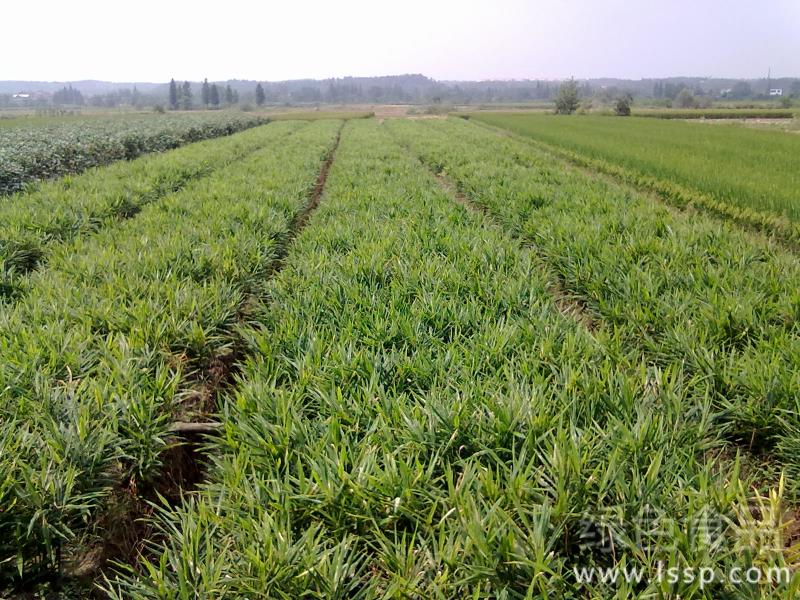
Ginger
I. Land selection
For ginger cultivation, choose sandy land with deep soil, loose and fertile texture, and convenient drainage and irrigation; avoid continuous cropping.
II. Land preparation and application of base fertilizer
Before sowing ginger, apply 1000-1500 kg of farmyard manure, 50 kg of calcium magnesium phosphate fertilizer, and 20 kg of compound fertilizer per mu as base fertilizer. After applying the base fertilizer, plow, turn, and harrow thoroughly. Divide into beds and open furrows, with each bed 1 m wide and 20 cm high, and open ginger sowing furrows across the bed surface.
III. Seed ginger treatment and sowing
Before sowing, first put the ginger seeds in the sun to dry for 2 days, then soak them in 2% formalin for 6-8 hours for disinfection (note that the disinfected ginger must be washed clean with clean water), or soak them in agricultural streptomycin for 6-7 hours. The suitable sowing period is from early March to mid-April in the south, and early May in the north. Sowing specifications. Generally, the plant spacing and row spacing are 0.25 m × 0.4 m, and 3500-4000 ginger pieces are sown per mu.
IV. Field management
1. Timely topdressing. Topdressing at the seedling stage should be mainly light and thin fertilizer; afterward, apply heavy topdressing twice. The first is during the vigorous growth period of ginger from early June to early July, a period that is the peak period of ginger nutrient uptake, applying 20 kg of compound fertilizer and 10 kg of urea per mu; the second is during the rapid tuber expansion period of ginger from early September to early October, applying 30 kg of compound fertilizer and 10 kg of potassium chloride per mu.
2. Proper shading and mulching. Summer temperatures are high and sunlight is strong, which is unfavorable for ginger to overwinter through summer, so shading and mulching are very necessary. Corn, soybean, and other crops can be intercropped at the edges of ginger beds, or a shed can be built to shade the ginger. At the same time, cover the ginger rows with rice straw to reduce ground radiation and increase soil moisture.
3. Water management. The soil must remain moist throughout the entire growth period of ginger. When ginger is drought-stressed, it requires irrigation with “running horse water”, and stagnant water in the bed furrows must be drained promptly.
V. Pest and disease control
(1) Controlling ginger blast: Before sowing, select disease-free ginger seeds and disinfect the seed ginger well. In the early stage of ginger blast, spray with agricultural streptomycin, Yeqingshuang, or Bordeaux mixture, once every 5 days, for a total of 3-4 sprays. Severely diseased ginger plants must be dug out and burned promptly, and lime should be scattered in the ginger holes for disinfection.
(2) Controlling ginger anthracnose: In the early stage of occurrence, control with thiophanate-methyl + carbendazim.
(3) Controlling ginger stem borer: During the occurrence period, control with trichlorfon + methomyl.