Wide use and good market returns for Guangdong finger citron: how to cultivate it for high yields
The Guangdong finger citron (Citrus medica var. sarcodactylis) is so named because the top of its fruit resembles human fingers; it is also called finger citron or bergamot, and the fruit is used as medicine. Besides medicinal use, Guangdong finger citron can also be processed to extract essence, and made into finger citron candy, preserved fruit and candied fruit, finger citron hangover-relief tea, finger citron anti-smoking candy, and other products. Market demand is large, supply falls short of demand, and development prospects are broad. First, the editor will introduce the high-yield cultivation techniques for Guangdong finger citron.
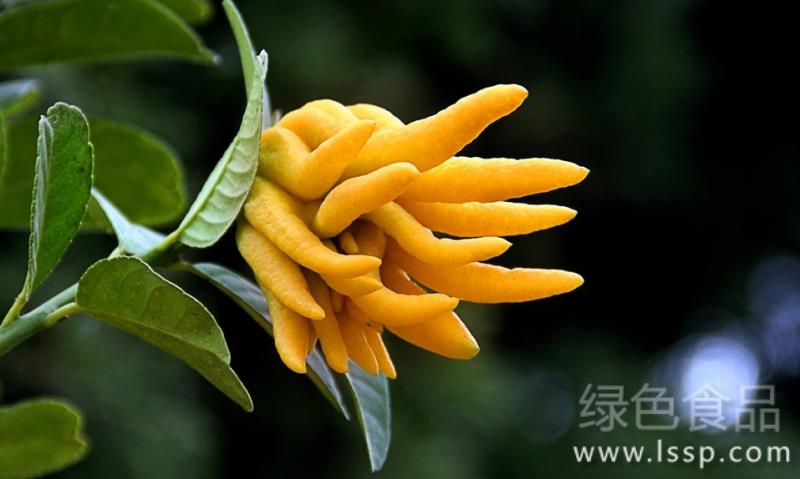
Guangdong finger citron
1. Seed selection and site selection:Choose high-quality, high-yield superior seedlings such as the “Jinbian Bairou” Guangdong finger citron superior variety with fist-sized fruit; both cuttings and grafted seedlings are acceptable. Guangdong finger citron likes warm, humid conditions, has strong adaptability, and is not strict about soil quality. As long as drainage is convenient and sunlight is sufficient, mountain and hilly slopes, flat land, and high-lying paddy fields are all suitable, regardless of whether the soil is black soil, yellow mud soil, or sandy loam; any plot where citrus can be planted is suitable for growing Guangdong finger citron.
2. Reasonable close planting and three-dimensional intercropping:Before planting Guangdong finger citron, the land should first be deep-plowed 2 times, and planted at a spacing of 2 m × 3 m, with 110 to 140 finger citron seedlings per mu. Dig base fertilizer pits 50 cm wide × 40 cm deep, fill each pit with 10 kg of chicken and cow manure mixed with soil, then backfill the pit. Plant in spring, choose robust superior seedlings, cut off half of the leaves, and also prune the top. Plant the finger citron seedling in the center of the pit, firm the soil, and water on sunny days. In the finger citron field, low-growing medicinal herbs such as Platycodon grandiflorus, Abrus cantoniensis, Scutellaria barbata, and Lysimachia christinae can be planted, which both increases income and prevents weeds from growing rampant.
3. Field management:Before fruiting, apply fertilizer well to promote shoots. That is, 10 days before the spring shoots, summer shoots, and autumn shoots sprout, apply 1 application of farmyard manure and quick-acting nitrogen fertilizer. Apply 50 g urea and 100 g phosphate fertilizer per finger citron plant, mix with chicken and cow manure, and apply deeply in combination with intertillage and weeding for the finger citron by opening a 20 cm deep ring-shaped trench, then cover with soil tightly. After September, there is no need to fertilize, to prevent excessive late-autumn shoot growth in finger citron. Two to three years after planting, Guangdong finger citron enters the fruiting stage and can continue to bear finger citron for more than 30 years. Fertilizer should be applied 4 times each year: the first is pre-flowering fertilizer, applied in mid-March, with 5 kg of decomposed human manure and urine per finger citron plant; the second application is at full flowering stage, with 5 kg of chicken and cow manure and 150 g urea per finger citron plant. The third is around “Minor Heat,” applying fruit-strengthening fertilizer, with heavy application of phosphorus and potassium fertilizer, to promote the expansion of finger citron fruit and increase yield. Apply 0.5 kg compound fertilizer mixed with 5 kg decomposed human manure and urine per finger citron plant; the fourth is fruit-picking fertilizer, after harvesting the fruit, dig symmetrical trenches 40 cm deep on both sides of the finger citron plant, apply 10 kg decomposed cow manure and 0.5 kg compound fertilizer per finger citron plant, mix with soil, then backfill the pit, to restore tree vigor and increase nutrient accumulation.
Finger citron
4. Pruning and shaping:Guangdong finger citron grows coarsely and quickly, and grows many branches, so it must be pruned and shaped every year to make the fruiting branches evenly distributed. Pruning and shaping are carried out after fruit harvest and before bud break in March, cutting off crossing branches, weak branches, diseased and pest-infested branches, and dead branches, while retaining the short branches that serve as fruiting mother branches. All water sprouts should be cut off to reduce nutrient consumption. Autumn shoots can be appropriately retained as fruiting branches for the following year. When finger citron bears many fruits, support posts or frames should be set up to avoid breaking the branches under weight. As long as management is proper, there is no distinction of “on years” and “off years” for finger citron.
5. Flower thinning and bud removal:Guangdong finger citron is monoecious, and can flower and fruit from May to December. The early flowering phenomenon in May is serious, but the early flowers are mostly male flowers that cannot bear fruit, and should all be thinned out. The flowers that open around “Summer Solstice” are mostly female flowers capable of bearing fruit, with a relatively high fruit-setting rate, but each short branch should retain 1 to 2 finger citron fruits, keeping only 2 to 3 large flowers and thinning out the remaining small flowers. Remove excess axillary buds sprouting on branches during the flowering period to reduce nutrient consumption and achieve the goal of high finger citron yield.
6. Pest and disease control:For canker disease, after harvesting finger citron, spray 0.8°Bé lime sulfur mixture 1 time in combination with orchard cleaning; each time new shoots sprout, spray 1000 times thiophanate-methyl solution 2 times; when new shoot leaves turn green, spray 500 times Tuzet solution 1 time. During the occurrence period of scale insects, spray a mixture of Supracide 1000 times and mineral oil emulsion 200 times.
7. Harvest:From September to October, when the skin of Guangdong finger citron turns yellow, cut it off with fruit shears.