Key Period of Sugarcane Internode Elongation: Key Points of Summer Field Management Techniques
Summer is the key period when sugarcane grows rapidly during internode elongation, and doing a good job in field management is the key to achieving a bumper sugarcane harvest.
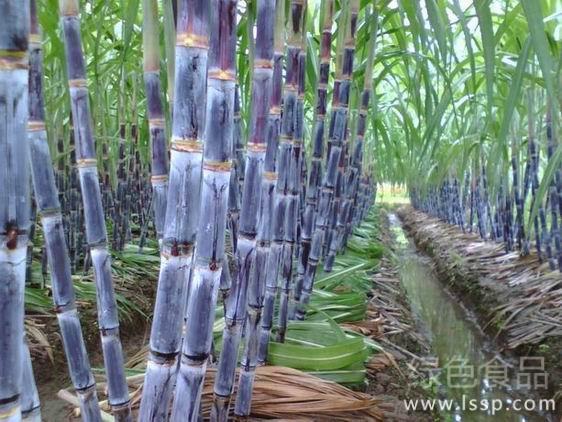
Sugarcane
I. Heavily apply stem-promoting fertilizer.During the elongation stage, sugarcane develops large roots, opens large leaves, and grows large stems, with a high nutrient demand; its fertilizer uptake accounts for more than 50% of the total fertilizer uptake. Therefore, stem-promoting fertilizer must be heavily applied, mainly nitrogen fertilizer, to promote the growth and thickening of sugarcane stems, prevent premature senescence, and increase yield and sugar content. Apply 10-13 kg of urea, 2500-3000 kg of decomposed human manure and urine, and 25 kg of cake fertilizer per mu. If the base fertilizer and early-stage phosphorus and potassium fertilizers are insufficient, phosphorus and potassium fertilizers can be applied as a supplement. If the sugarcane plants grow vigorously and the leaves are dark green, apply less; if the growth is poor, or the plants turn yellow too early or senesce prematurely, apply early and heavily.
II. Build high soil mounds to prevent lodging.Carry out high mounding at the same time as fertilization. Mounding can conserve fertilizer, improve fertilizer efficiency, and also make the sugarcane root system well developed and prevent lodging. The specific method is: through repeated thin mounding, achieve high mounding; each mounding covers only one node of the sugarcane base, so that the sugarcane base nodes develop roots one by one, which is beneficial to sugarcane growth. During mounding, attention should be paid to the management of the border rows, such as adding fertilizer and mounding for the border rows, and preventing trampling by people and livestock, so as to overcome the border-decline phenomenon.
III. Strip old leaves to prevent diseases and pests.Good air and light penetration in the sugarcane field is one of the important conditions for sugarcane growth. In the late growth stage, sugarcane grows one new leaf every 7—10 days. Therefore, basal leaves and withered yellow old leaves should be stripped off in time to enhance ventilation and light penetration, promote photosynthesis, make the stalks thick and strong, enhance lodging resistance, increase sugar content, help prevent and control diseases and pests, reduce damage, and increase sugarcane yield per unit area.
IV. Irrigate to prevent drought and strengthen stems.From August to September, sugarcane enters the period of rapid internode elongation. With good water and fertilizer conditions, it can grow 3-3.5 cm taller per day and 8-90 cm taller per month, so irrigation must be taken seriously. Especially during drought, irrigation should be carried out in time, and the soil moisture content should preferably be maintained at 60%-80%. At this time, the sugarcane ridges should be covered to reduce soil moisture evaporation; old leaves or plastic film can be used, and cash crops can also be interplanted. If conditions permit, water can be pumped for irrigation to avoid drought-induced yield reduction. Where there is water, irrigate well to ensure a bumper sugarcane harvest.
V. Prevent and control diseases and pests to ensure a bumper harvest.August to September is not only the season of rapid sugarcane internode elongation, but also a period of high incidence of diseases and pests. For example, the sugarcane stalk borer and the two-spotted borer in July, and scarab beetles and nematodes in August to September, especially nematodes, which feed on the sugarcane roots and can cause sugarcane wilting and lodging, with great damage. Control method: apply pesticides at the appropriate time according to the pest situation. For sugarcane fields with dead hearts, apply 1.5-3 kg of carbofuran per mu, which not only kills ants and borers but also controls underground pests such as cutworms, scarab beetles, and nematodes, with very good results.