Key points for topdressing open-field eggplants: rational use of chemical fertilizers to increase yield
Chemical fertilizers are a double-edged sword: used properly they increase crop yields, otherwise they cause fertilizer damage. Today the editor will share with vegetable growers the key points for topdressing open-field eggplants.
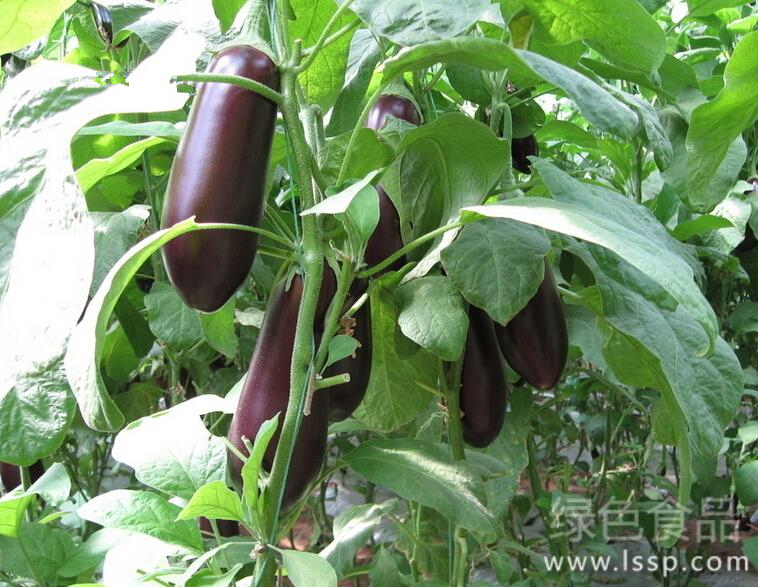
Eggplant
1. Grow strong seedlings:Summer-sown eggplants are sown and raised in the open field from late April to early May, choosing eggplant varieties that are heat-tolerant, moisture-tolerant and disease-resistant. In the early stage of seedling raising, build arched frames over the seedbed, which can both prevent rain and prevent scorching sun; ventilate after emergence, and when two leaves have formed with a growing point between them, prick out the seedlings once, with a seedling age of about 60 days.
The eggplant seedling-raising method and seedling-stage management can follow those for tomato, and note: (1) eggplants germinate slowly, so the pre-sprouting time should be 1-2 days longer; (2) during seedling raising, the temperature for eggplants should be 2-3°C higher than for tomatoes; (3) eggplant roots lignify early and have poor regeneration ability, so when pricking out or transplanting, carry as much of the original soil as possible to avoid damaging the roots.
2. Land preparation and fertilization, timely transplanting:Eggplants should not be grown in continuous cropping, nor continuously after tomato, pepper, potato, etc. Summer-sown eggplants are mostly planted after the wheat harvest, and can follow the previous crops of early cabbage, cauliflower, garlic, etc., which is called "wheat-stubble eggplant".
Before planting, apply 75000-90000 kg of decomposed organic fertilizer and 400-600 kg of phosphorus-potassium compound fertilizer per hectare, plow and level the land to make beds, and plant the seedlings in furrows or holes. At planting, mix biological fertilizer thoroughly with fertile soil and scatter it into the planting holes, keeping 50000 eggplant seedlings per hectare, and water after planting.
3. Skillful topdressing:After planting, cultivate in time to raise soil temperature and promote seedling recovery. After seedling recovery, do not water unless dry; if dry, water lightly, and cultivate 2-3 times in time to control growth, promoting the eggplant roots to develop deep and downward, laying the foundation for the eggplant plants to expand their absorption area and to flower and bear fruit. Control growth until the "eyeing" stage of the first eggplant (the fruit on the main stem) ends. Combined with watering, apply 15000 kg of decomposed human excrement per hectare. This fertilization should not be too early or too late: too early easily causes excessive vine growth, too late makes the fruit skin turn purple, affecting the development and branching of the eggplant. When the second and third tiers of eggplants are flowering, eggplants need the most fertilizer and water at this stage; generally water once every 5-6 days to keep the soil moist, and combined with watering apply 15000 kg of decomposed human excrement per hectare or decomposed cake fertilizer or 225 kg of nitrogen-phosphorus-potassium compound fertilizer. After that, alternate once with clear water and once with fertilized water, topdressing about every 15 days, for a total of 8-9 times. For mid- and late-maturing cultivation, during the peak fruiting stage, foliar spraying with 0.2% urea or 0.3% potassium dihydrogen phosphate can be used, and biogas slurry diluted with water can also be sprayed, which is beneficial to the growth and fruit setting of eggplant plants.
During the growth period of eggplants, excessively high or low temperatures, insufficient light, malnutrition, and soil that alternates between dry and wet cause eggplant flower and fruit drop. Therefore, pay attention to drainage during the rainy season, prevent waterlogging damage, and avoid excessive use of potassium fertilizer.
Eggplants generally take about 20-25 days from flowering to tender fruit maturity, and should be harvested and marketed in time. Early harvest of the first eggplant benefits branching and fruit setting. Harvesting in the morning gives eggplants that are fresh and tender with a glossy sheen, and of high commercial value.