Asparagus stem blight is called the cancer of asparagus; how is it prevented and controlled?
Asparagus stem blight is widely distributed, causes severe damage and is devastating, and is called the cancer of asparagus. It occurs frequently in summer and often causes large-scale devastation of asparagus. It has become the main limiting factor in growing asparagus.
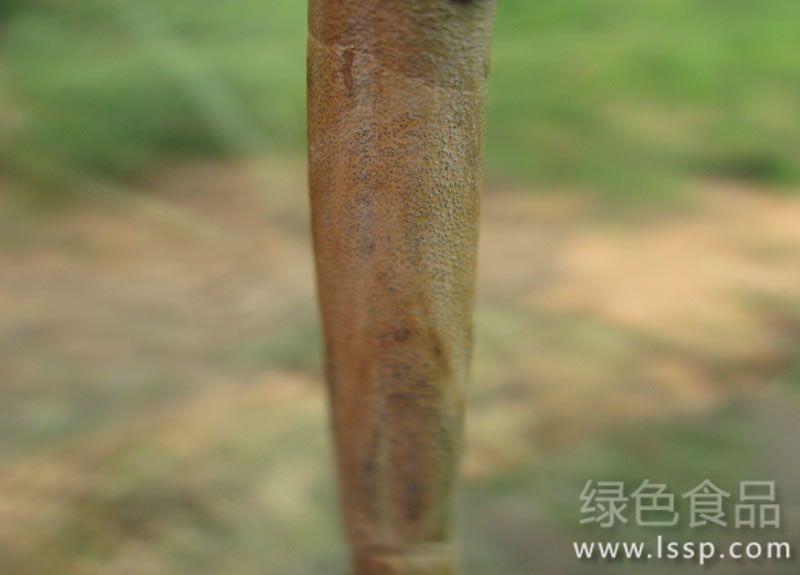
Asparagus stem blight
1. Symptoms of damage. The affected parts are mainly the stems and branches of asparagus, while the leaves are not attacked. At the early stage of the disease, small bronze-colored water-soaked spots appear, which gradually expand to form spindle-shaped lesions with reddish-brown or brown edges; in the middle and late stages they turn grayish-brown, slightly sunken, and densely covered with small black dots, namely the pycnidia. The lesions can penetrate deep into the pith, and once they encircle the stem or branch, the asparagus above the lesion dries out, loses water and dies. July to September is the peak period of the disease.
2. Control techniques
(1) Reduce the pathogen.New asparagus fields have relatively mild disease, while old asparagus fields develop the disease early and severely. The pathogen in new asparagus fields mainly comes from: first, seed-borne inoculum; second, wind or rain carrying the pathogen from old asparagus areas. Therefore, cleaning and disinfection of asparagus fields must be done well to reduce the sources of infection.
(2) Reasonable fertilization.Increase the amount of organic fertilizer and phosphorus and potassium fertilizer, and appropriately control the amount of nitrogen fertilizer. The suitable ratio of nitrogen, phosphorus and potassium is 1:0.6:0.8. Applying organic fertilizer can increase the organic matter content in the soil, loosen the soil, promote robust growth of the asparagus root system, stems and leaves, and improve disease resistance.
(3) Chemical control.Prevention first; after the young spears of asparagus emerge, spray promptly. In spring, along with cleaning the field, drench the asparagus roots with 50% carbendazim at 1:300 dilution; in May to June, at the early stage of stem blight, use 80% mancozeb at 1:400 dilution or 75% thiophanate-methyl at 1:500 dilution and spray once every 7 to 10 days; in July to September, during the peak period of the disease, spray once every 5 to 7 days. When spraying, focus on the asparagus stems and branches 60cm above the ground, with the upper branches and leaves as a supplement, and spray evenly and thoroughly; after rain, spray once more as a supplement. Alternate the use of the above fungicides to avoid the development of fungicide resistance in asparagus.