Doing Summer Management of Pear Trees This Way Makes the Yield More Guaranteed
Summer is the period of the year when pear trees have the greatest nutrient demands and grow the fastest, and at the same time the pear trees are most affected by external conditions during this period. In this period, pear trees have high requirements for fertilizer and water, and are also easily attacked by pests and diseases. Therefore, the level of summer management of pear trees and the quality of technical measures will affect the yield of pear trees and the quality of the fruit.
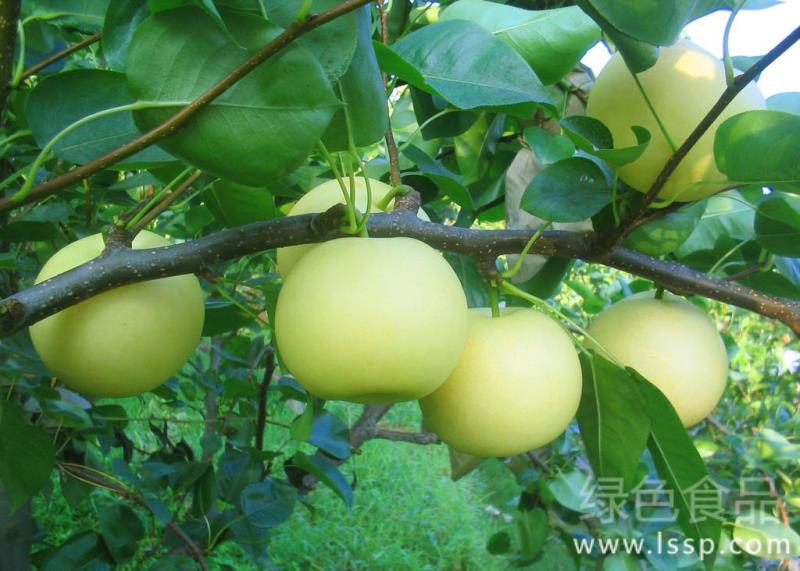
Pear tree
I. Soil, Fertilizer and Water Management
1. Fertilizer and water management. From late May to early June, before the pear trees differentiate flower buds, apply a topdressing of fruit-tree special fertilizer based mainly on phosphorus and potassium with nitrogen as a supplement; depending on the age of the tree and the amount of fruit set, apply 1-1.5 kg per tree, and irrigate immediately after application. Combined with spraying pesticides, spray the trees 1-2 times with 0.3% amino acid compound fertilizer. In July, after the early-maturing varieties are harvested, immediately apply a quick-acting nitrogen fertilizer to supplement the nutritional deficiency in the tree caused by bearing fruit. For mid- and late-maturing varieties, apply an additional topdressing of phosphorus and potassium fertilizer at this time. In August, no fertilizer is generally applied; only after the fruit is harvested, apply a topdressing of quick-acting nitrogen fertilizer. Note that after fertilizing, appropriate irrigation should be carried out according to soil moisture conditions.
2. Soil management. Summer temperatures are high and soil humidity is high, making it easy for weeds to grow. Usually after heavy rain or after irrigation, the soil should be loosened and weeds hoed in a timely manner. Where conditions permit, orchard grass mulching can be carried out, that is, after the wheat harvest, use wheat straw to cover the space between rows of fruit trees or the tree disks within the rows, with 1000-1500 kg of straw per mu and a mulching thickness of 20 cm. Note that after mulching, press down soil to prevent fires.
II. Pest and Disease Control
1. Young fruit stage. Mainly control rust, scab, ring rot, pear psylla, pear two-spotted aphid, pear lace bug and pear fruit moth. First, manually remove diseased and pest-infested shoot tips and bury them deeply or burn them; second, spray 80% Penco 800-fold solution and 30% compound carbendazim 500-fold solution to control rust, scab and ring rot; third, spray 10% Jianmie emulsifiable concentrate 2500-3000-fold solution to control insect pests; if the pest infestation is relatively severe, it can be mixed with 10% imidacloprid (Yashijing). Note that Bordeaux mixture should not be used 40 days after fruit set, to prevent fruit russeting.
2. Fruit enlargement stage and ripening stage. In this period, mainly control scab, ring rot, rust, fruit moth, pine caterpillar and rust mite. Measures to take: first, tie grass bundles on pear trees to trap and kill the pear fruit moth; second, spray 80% Penco 800-fold solution or double-strength Bordeaux mixture 200-fold solution to control diseases; third, spray 10% Jianmie emulsifiable concentrate 2500-3000-fold solution or 30% Taoxiaoling 2000-fold solution to control insect pests. Note: during the rainy season, a spreader can be added to the spray; do not spray Bordeaux mixture in the later stage of fruit growth, so as not to contaminate the fruit surface.
Pear tree
III. Summer Pruning
The purpose of summer pruning is to control excessive vigorous growth of the tree, promote flower formation in the fruit tree and improve ventilation and light penetration conditions.
1. Normally fruiting trees. Comprehensively apply methods such as pinching, breaking shoots, thinning and branch bending to strictly control dense branches and vigorous shoots on the back and outer periphery of scaffold branches.
2. Pinching, girdling and branch thinning. Combined with shaping, remove the vigorous and retain the weak, and thin out vigorous branches on the back. Bend and open the angle of the main branches so that the waist angle of the main branches grows at 50 degrees, in order to moderate the tree vigor, increase light and promote flower formation.
IV. Fruit Bagging
1. Bagging period. Bagging is carried out 25-50 days after flower drop, and generally the bagging work should be completed before early June.
2. Management before bagging. On the basis of carefully doing flower and fruit thinning, in order to prevent pests and diseases from invading the pears after bagging, spray insecticidal and disease-preventing agents 5-7 days before bagging. Usually use 70% thiophanate-methyl 800-fold solution plus 10% cypermethrin 2500-fold solution or plus 5% abamectin 4000-fold solution. If bagging work has still not been completed 10 days after spraying, the unbagged pear trees should be sprayed again.
3. Bagging method. Before bagging, place the whole bundle of fruit bags in a damp place, wrap them with a single layer of newspaper, bury them in moist soil, or spray a little water at the bag opening to make them damp and pliable for ease of use. After the pear fruit is selected, first open the bag mouth and support the bag bottom so that the ventilation and drainage openings at the two bottom corners open and the bag body puffs up. Hold the bag mouth 2-3 cm from the lower part, put it over the fruit, then fold the bag mouth from the middle to both sides in sequence in a "folding fan" manner; above the bag mouth, turn the tying wire 90 degrees from the connection point, rotate it once around the bag mouth and tie the bag mouth tightly. Note: never pull the tying wire down; the tying position should preferably be 2.5 cm below the upper edge of the bag mouth; as for the relative position of the fruit bag and the young fruit, the bag mouth should be as high as possible, with the fruit suspended inside the bag, so that the bag mouth is close to the fruit platform position, to prevent the bag body from rubbing against the fruit surface.