Eggplant Phytophthora fruit rot is common during the full fruiting stage; how should it be prevented and controlled?
Eggplant Phytophthora fruit rot, commonly known as fruit rot or watery rot, is one of the important diseases of eggplant. Eggplants can be affected at all growth stages. Losses are generally 20-30%, and more than 50% in severe cases. The peak disease period is the full fruiting stage of eggplant, and in rainy regions and years it often breaks out into a disaster, causing devastating losses.
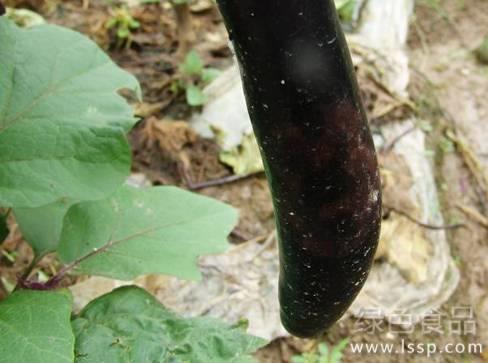
Eggplant Phytophthora fruit rot
I. Disease symptoms
Phytophthora fruit rot mainly damages eggplant, with young fruits near the ground being affected more often. In the early stage of the disease, small round water-soaked spots appear on the eggplant skin, then rapidly expand and spread to the entire eggplant. The lesions on the eggplant are yellowish-brown or dark brown; when humidity is high, the lesions become covered with abundant white flocculent mold, and the inner flesh turns brown and rots. Infected eggplants mostly drop off in the later stage and quickly rot away completely. Some do not drop; after rotting, they lose water and shrink into dark brown mummified fruits. Sometimes leaves and branch tips can also be affected; damaged leaves produce nearly round or irregular rectangular water-soaked light brown lesions, sometimes with obvious concentric rings. When moist, scattered white mold grows on the lesions. When stems are infected, they first appear water-soaked, then turn dark green or purplish-brown; the diseased part becomes stiff and constricted, and the branches and leaves above it wilt.
II. Prevention and control methods
1. Select disease-resistant eggplant varieties and pay attention to crop rotation.
2. Grow strong, healthy seedlings in the seedbed. Choose a seedbed on high ground facing south and backed to the north, in a field that does not easily accumulate water. The soil must be disinfected three weeks before sowing.
3. Use high ridges and insist on plastic film mulching cultivation. Level the soil well to avoid water accumulation. Apply sufficient base fertilizer and increase phosphorus and potassium fertilizer. Carry out wide-and-narrow row planting, timely cultivating, pruning, and removal of old leaves, improve ventilation and light conditions, and harvest in time. Immediately remove and deeply bury infected eggplants.
4. Strengthen field inspection and treatment. Immediately apply pesticide control when infected eggplants and leaves are found. Spray 72.2% Propamocarb aqueous solution at 800 times dilution, or 75% chlorothalonil wettable powder at 500 times dilution, or 58% metalaxyl-mancozeb wettable powder at 500 times dilution, or 65% zineb wettable powder at 500 times dilution.