Control Methods for Pepper Not Setting Fruit Due to Broad Mites
Adult and nymph mites gather on the young, tender parts of pepper plants to pierce and suck sap. The undersides of damaged leaves turn grayish brown or yellowish brown, with an oily sheen or oil-soaked appearance, and the leaf edges curl downward. Tender stems, branches and fruits turn yellowish brown and become twisted and deformed; in severe cases the tops of pepper plants dry up. Affected flowers and buds, in serious cases, fail to bloom and set fruit, and the peppers become corky, lose their gloss and form rusty-walled fruits.
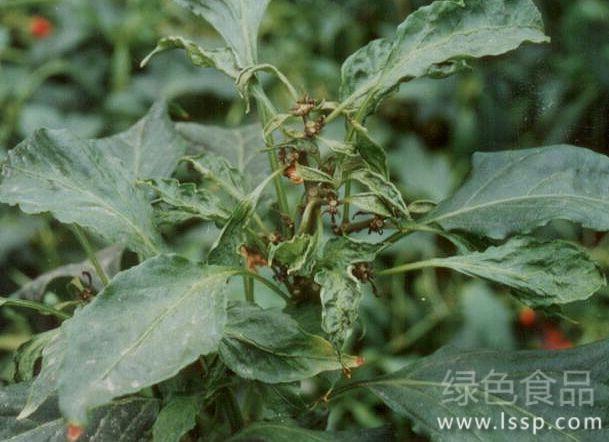
Pepper Broad Mite
Control Measures :
1. Crop rotation. Practice crop rotation on land where broad mites have hosted on solanaceous crops such as peppers, as well as cucumber, potato, cowpea and common bean, preferably with a 2-3 year interval, and adopt paddy-upland rotation.
2. Dig ditches for drainage. Remove standing water from the field to reduce field humidity.
3. Apply pesticides at the right time. The broad mite has a short life cycle and extremely strong reproductive capacity, so early control should be emphasized. Timing of the first application: inspect carefully in mid-May, and when 10% of pepper plants are infested and 2% of plants have curled leaves, or spray at the early flowering stage. Thereafter spray once every 10-15 days, for 3 consecutive treatments, to bring the damage under control. The following pesticides and concentrations may be used: 1.8% abamectin 4000-fold dilution, or 15% pyridaben 3000-fold dilution, or 73% propargite 2000-fold dilution, 20% azocyclotin 2500-fold dilution, etc., all of which give good control results.