Pear scab breaks out frequently in summer, how to prevent and control pear black heart disease
Pear scab is also called scab disease. In summer, high temperature and high humidity favor the occurrence of pear scab. The pathogen of pear scab spreads and infects in the pear orchard via rainwater, mainly harming leaves and fruits. After leaves are infected, round, oval or irregular lesions appear on the back of the leaves, the lesions spread along the leaf veins and produce radial black mold-like substances; in severe cases, the entire back of the leaf is covered with black mold, causing early defoliation. After fruits are infected, round lesions of varying sizes appear on the fruit surface; after the lesions harden, the surface becomes rough, sunken and cracked, appearing scab-like, and the wounded part is very easily infected by mold when exposed to rainwater and then rots.
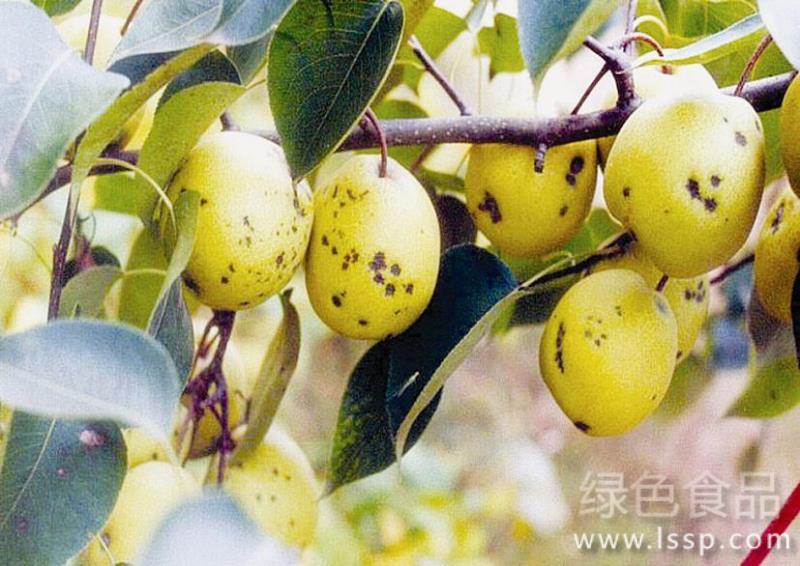
Pear scab
II. Control methods:
1. Agricultural control: promptly remove diseased leaves and diseased pears when found, burn them in a centralized manner or bury them deeply, to prevent the spread and expansion of the pathogen. After rain, drain accumulated water promptly to reduce the humidity in the orchard. In combination with summer pruning, promptly cut off upright branches, water sprouts and crossing branches from the base, to increase ventilation and light penetration in the orchard and improve the orchard microclimate.
2. Chemical control: spray promptly before rain for prevention, spray promptly after rain for control, and re-spray promptly if it rains after spraying. For the pesticide, you may choose 40% DuPont Fuxing 10,000-fold dilution, 10% difenoconazole 3,000-fold dilution, 80% Hanbang carbendazim 2,000-fold dilution, or Keshade Sanqian 2,000-fold dilution, spraying once every 7-10 days, for 3-4 consecutive sprays. The above fungicides should be used alternately to avoid resistance. When spraying, pay attention to spraying evenly, turning up and covering down, penetrating inside and out, circling around the tree, spraying the inner canopy and the tips, so that the upper and lower parts of the canopy and the inside and outside of the canopy are all covered with the pesticide, and especially note that the back of the leaves of the pear tree must be sprayed with the pesticide. In addition, adding foliar fertilizer when spraying pesticide can enhance the disease resistance of the leaves.