How to prevent and control rice seedling rot caused by rice seedling rot leading to dead rice seedlings
Rice seedling rot is a widespread phenomenon and is the general term for rotten seeds, rotten buds and dead seedlings of rice caused by infection with pathogens or by non-pathogenic factors. It can be divided into two categories: infectious and physiological. Physiological seedling rot is mainly caused by adverse environmental conditions; infectious seedling rot refers to damage caused by infection with Pythium, Achlya, Fusarium and other fungi induced by adverse environmental conditions.
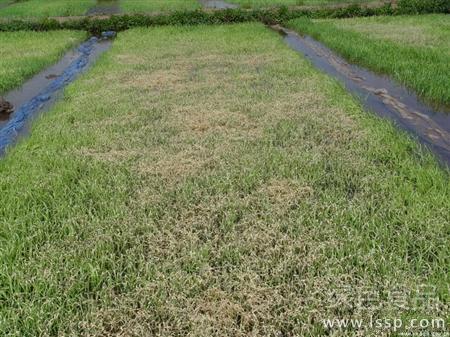
Rice seedling rot
Symptoms
There are many causes of rice seedling rot and the symptoms vary greatly. Rotten seeds of rice means that after the rice grain is sown, the seed embryo turns black, smells bad and even rots. Rotten buds means that the rice buds die after sowing before they turn green. Physiological seedling rot commonly includes silted seeds, exposed seeds, black roots and fallen buds. In infectious seedling rot caused by Achlya infection, the affected parts of the young rice buds first appear as milky white gelatinous matter, then become radial white matter, and finally become yellow cottony matter, commonly known as "water yangmei"; damping-off disease is caused by Fusarium infection, which first grows white mycelium centered on the roots and bud bases, quickly turns brown, causing the young buds and young roots to turn brown, twist and rot, also known as "bud rot", and in the later stage pink mold grows on the diseased base. Rotten seeds are mainly caused by moisture during seed storage, improper seed disinfection methods, or improper control of temperature and moisture during sprouting. Physiological seedling rot is mainly caused by poor operation quality in the seedling field, improper sprouting, sowing and water management, or adverse environmental conditions and reducing toxic substances produced by large amounts of undecomposed organic matter in the soil.
Prevention and control
Agricultural control should be the main method for rice seedling rot. Firmly grasp the quality of seed soaking, sprouting and sowing, and at the same time emphasize the quality of land preparation in the rice seedling field, apply fully decomposed organic fertilizer, and fertilize and irrigate scientifically. For infectious seedling rot, when the rice seedlings are at the one-leaf-one-heart to three-leaf stage, if no water droplets are found at the leaf tips of the seedlings and sporadic leaf rolling occurs, spray promptly. A 700-fold dilution of 50% Dexon wettable powder or a 500-1000-fold dilution of 30% Likuijing can be used for irrigation; if the disease is relatively severe, the concentration of the medicinal solution can be appropriately increased.