Causes of Flower and Pod Drop in Cowpeas and How to Prevent and Control It
In midsummer, high temperatures and humidity, drought, heavy rain and other weather conditions, frequent pests and diseases, and poor coordination of water and fertilizer management are among the many factors that can cause cowpeas to drop flowers and pods, resulting in reduced yield and income. The Green Food Network introduces to vegetable growers the causes of flower and pod drop in cowpeas and how to prevent and control it.
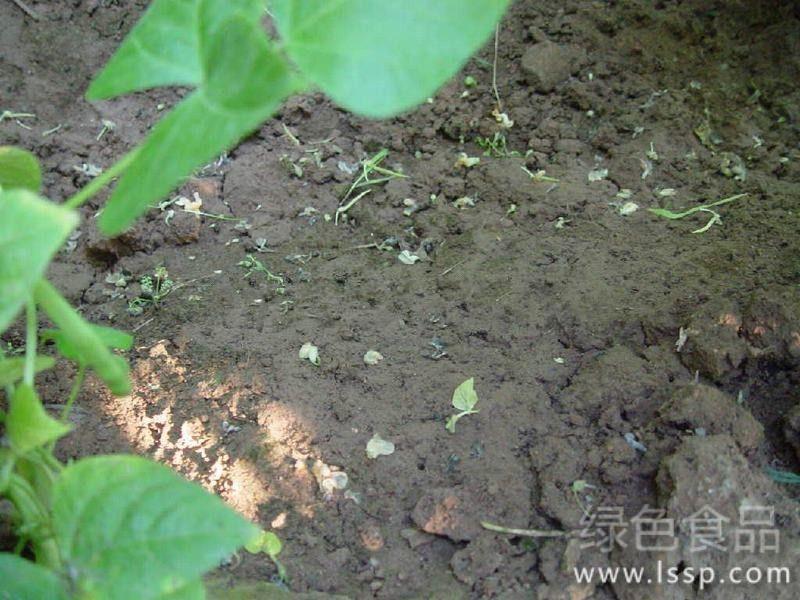
Flower and pod drop in cowpeas
1. Unsuitable temperature.The most suitable temperature for cowpea growth is between 20-28°C, and cowpeas can also adapt to high temperatures of 30-40°C for a short period. The most suitable temperature for flowering and pod setting is 25-28°C; above 35°C the pod-setting ability declines, and sustained high temperatures easily cause flower and pod drop in cowpeas. If conditions permit, shade netting can be used to lower the temperature, or a small amount of water can be applied in the early morning or around dusk to reduce the field temperature and provide a suitable temperature for cowpea growth.
2. Uneven drought and waterlogging.At the early flowering stage, cowpeas are relatively sensitive to water; too much water easily causes excessive vegetative growth and flower drop. During the pod-setting stage, water demand is high; if high temperatures and drought occur at this time, flowers and pods easily drop. Standing water in the field and excessively high soil moisture are not conducive to the growth of cowpea roots and root nodules, causing root drowning and root rot, yellowing and shedding of leaves, and flower and pod drop. In terms of management, when high temperatures and drought occur, water promptly; during the pod-setting stage, combine watering with topdressing, and apply compound fertilizer deeply in furrows. In the event of heavy rain, dig drainage ditches promptly to prevent waterlogging.
3. Excessive vegetative growth of plants.Cowpeas in the early growth stage are affected by high temperatures and are prone to excessive vegetative growth. If not paid attention to, the plants grow rapidly, causing an imbalance in the carbon-to-nitrogen ratio and unbalanced nutrients, so that leaves and flowers, flowers and flowers, and pods and pods compete for nutrients, leading to flower and pod drop. In terms of management, follow "control in the early stage and promote in the later stage", controlling water and fertilizer in the early stage. At the peak pod-setting stage, apply topdressing with compound fertilizer with a relatively high phosphorus and potassium content, increase the supply of fertilizer and water, promote growth, more flowering, and more pod setting. In the middle and late stages, when the root system begins to age, foliar spraying of monopotassium phosphate has the effect of preventing drop and increasing yield.
4. Pests and diseases.During the growth period of cowpeas, although the pod-setting rate is not high, there are many inflorescences and flower buds, making them susceptible to damage by the cowpea pod borer. The cowpea pod borer mainly damages the flowers and pods of cowpeas; once damaged, it causes flower and pod drop. In addition, cowpea rust damages the leaves, and if not treated in time, it also easily causes flower and pod drop. In terms of management, when encountering pests such as aphids, cowpea pod borers, cotton bollworms, and tobacco budworms, use 10% imidacloprid or 4.5% beta-cypermethrin at 1000 times dilution to control the pests. For cowpea rust, use 20% triadimefon emulsifiable concentrate at 2000 times dilution, or 10% difenoconazole water-dispersible granules at 1500-2000 times dilution, spraying once every 7-10 days for 2-3 consecutive sprays.