How to prevent and control grapevine diseases during the flowering period that affect yield
The flowering period of grape varieties such as Summer Black and Red Globe is threatened by gray mold and rachis brown blight, both of which are fungal diseases. Gray mold is more severe in southern vineyards, and in heavily affected vineyards it can destroy more than 70% of the flower clusters, mainly harming the corolla, pedicels, cluster stems and young fruit. Rachis brown blight, which growers call rotten bloom, mainly harms the pedicels, cluster rachis, branch axes and young fruit, and occurs at the same time as gray mold. Continuous rain and high humidity easily trigger these two diseases. Control measures:
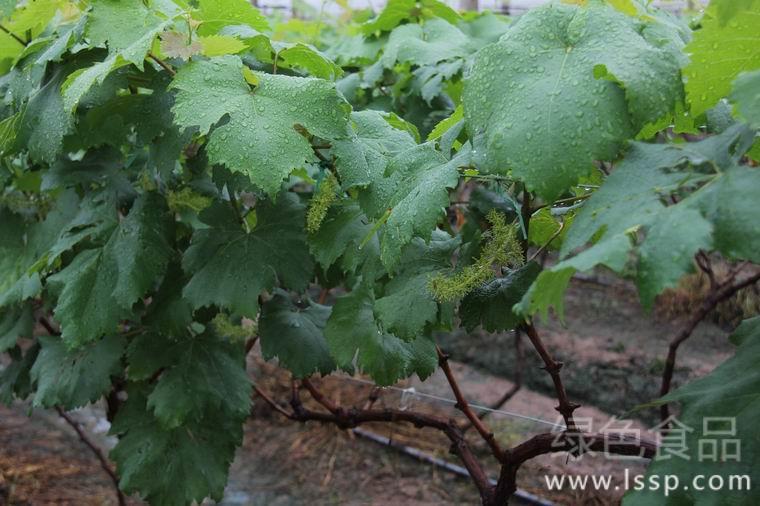
Grapevine flowering period
1. Manage the canes well before and after the grapevine flowering period: overly dense canes, lateral shoots not removed in time, a closed canopy, and flower clusters that receive no light are the main factors that trigger disease. Therefore, about 15 days before flowering, thin the shoots in time and remove excessive and overly dense shoots; at the start of flowering or 1-2 days before flowering, pinch off the growing tips; for lateral shoots, leave 2-3 leaves and pinch at a total of three node positions before and after the flower cluster (to prevent sunburn), and remove all the rest, so that the canes and leaves are not closed together and the flower clusters receive light.
2. Reduce the humidity inside the grape greenhouse: before and after the flowering period, when low temperatures and rain occur and the minimum temperature is above 14°C, for greenhouse cultivation open the greenhouse door all day; for rain-shelter cultivation, on the premise that the leaves are not exposed to rain, raise the greenhouse film to improve ventilation in the vineyard and reduce the humidity inside the greenhouse.
3. Chemical control: apply two sprays well, namely at the start of flowering or 1-2 days before flowering and on the seventh day after grapevines bloom. Pay special attention that the period from the end of flowering to fruit set is the peak period of disease infection, so on the seventh day after the start of flowering a chemical spray must be applied for control. If disease has already occurred before flowering or there is continuous rain during the flowering period, add 1-2 sprays during the flowering period, but spraying should avoid the morning flowering time and be chosen after 2 p.m. Chemical selection: for grapevines that have not yet developed disease, protective fungicides such as iprodione can be used; if disease has already occurred, therapeutic fungicides such as Scala (i.e. pyrimethanil), Sumilex, Ronilan or Amistar should be used. Various pesticides should be used alternately to avoid the development of pesticide resistance in grapevines.