How to prevent and control bacterial soft rot in tomatoes that causes fruit rot?
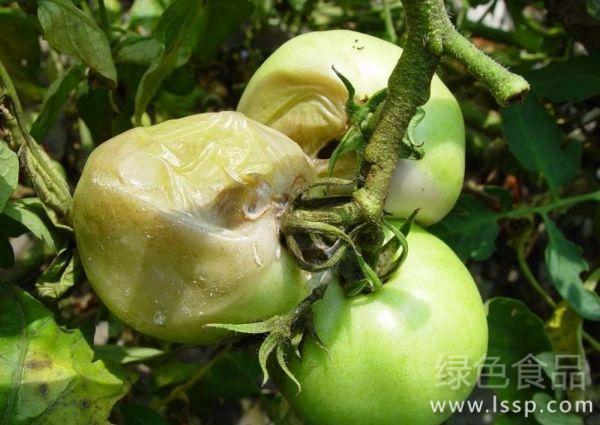
Tomato bacterial soft rot
Tomato bacterial soft rot mainly infects stems and tomato fruits. Stem infection by soft rot mostly occurs during the tomato growing period. First, green water-soaked patches appear on the stem near the ground, gradually expanding into round or irregular brown spots, with a pale narrow halo ring around the lesion, and the diseased part is slightly raised. Tomato fruit infection mainly occurs at the ripening stage. Early lesions are chlorotic round small white spots, which then become dirty brown spots. As the fruit colors and ripeness increases and bacteria multiply, the lesions gradually spread to the entire tomato, but the skin remains intact while the flesh rots.
Prevention and control methods
1. Pruning and pinching out shoots should be done when the tomato plants are young and small, so that the wounds are small and heal quickly. Do not prune or pinch out shoots on rainy days or when dew has not yet dried.
2. When preventing fungal diseases such as tomato late blight, add insecticides to control leaf-eating pests and reduce infection wounds.
3. When necessary, spray tomatoes with 23% copper ammonia complex aqueous solution at 500 times dilution, 50% copper bis(dihydrogen phosphate) wettable powder at 500 times dilution, 72% agricultural streptomycin sulfate wettable powder at 4000 times dilution, and 77% Kocide wettable powder at 500 times dilution, spraying once every 7 to 10 days, for 1 to 2 sprays.