How rice blast affects rice quality and how to prevent and control rice blast
Rice blast is a disease caused by infection with the fungus Magnaporthe grisea (Pyricularia grisea). It can occur at all growth stages and on all parts of the rice plant, and is divided into seedling blast, leaf blast, leaf collar blast, node blast, neck blast, branch blast and grain blast. The most common and most damaging are seedling blast, leaf blast and neck blast.
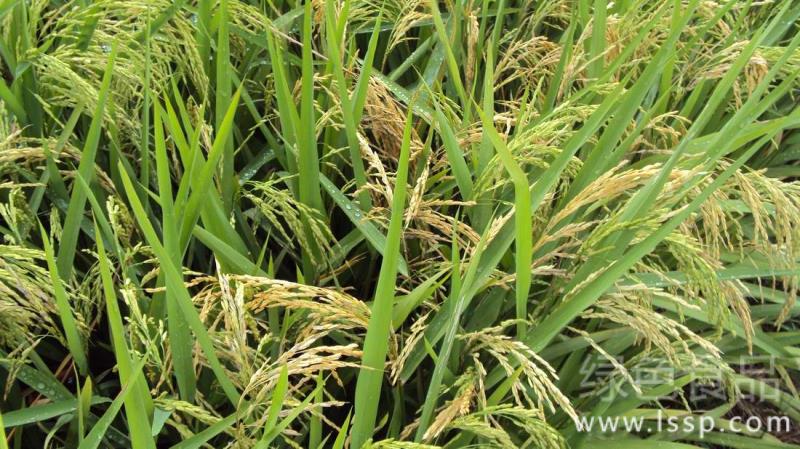
Rice blast
① Seedling blast: it mostly occurs at the 2-3 leaf stage of rice seedlings. The base of the seedling is infected by the pathogen and turns grayish black, and the seedling eventually curls up and dies.
② Leaf blast: it can occur from after the 3-leaf stage to the heading stage of rice. There are four types of lesions. Chronic type: also called the typical lesion, the most common, the lesion is spindle-shaped, the outermost layer is a yellow halo, the inner ring is brown, the center is grayish white, and there are brown necrotic lines at both ends of the rice leaf; acute type: the lesion is dark green, water-soaked, nearly round or irregular. It occurs at high frequency when the variety is susceptible, nitrogen fertilizer is excessive and meteorological conditions are suitable; white spot type: the lesion is a nearly round spot, occurring at high frequency under unfavorable meteorological conditions, and when conditions improve it can transform into the chronic and acute types; brown spot type: small brown spots between the leaf veins, mostly appearing on disease-resistant rice varieties and lower old leaves. Among the above four types of lesions, the first two are spore-producing lesions that directly affect the occurrence and development of the disease.
③ Neck blast: it occurs at the neck of the main panicle stem to the first branch node of the rice. It first appears as small brown spots, then expands in a ring shape and becomes gray or dark green. When it occurs early, it mostly forms white heads, seriously affecting grain filling, grain weight and grain quality.
[Disease pattern] The rice blast pathogen mainly overwinters as mycelium and conidia on diseased grains and diseased rice straw, and spreads through airflow. Seed-borne infection easily causes seedling blast in double-season early rice in the south. From tillering to booting, low temperature and frequent rain often cause leaf blast. Frequent rain before heading easily causes neck blast. Mountainous areas, long-term deep irrigation, cold-waterlogged fields and excessive application of nitrogen fertilizer all easily trigger rice blast.
[Control] Rice blast control should center on planting disease-resistant, high-quality rice varieties, with healthy cultivation as the foundation and chemical protection as a supplement.
(1) Rationally use disease-resistant rice varieties. The physiological differentiation of the rice blast pathogen is pronounced, and planting highly resistant rice varieties on a large scale can easily lead to loss of resistance, so attention should be paid to selecting good disease-resistant varieties according to local conditions, rationally arranging varieties, and avoiding large-scale monoculture.
(2) Scientific field management. Cultivate strong seedlings, apply sufficient base fertilizer, increase the application of potassium fertilizer, zinc fertilizer and organic fertilizer, apply panicle fertilizer skillfully, and drain the field at the appropriate time.
(3) Seed treatment. Soak seeds in a 1000-fold dilution of 10% 401 antibacterial agent for 48 hours, or in a 2000-fold dilution of 80% 402 antibacterial agent for 48-72 hours and then germinate directly, or soak seeds in a 500-700-fold dilution of 20% tricyclazole wettable powder for 24 hours, wash clean and then germinate.
(4) Chemical control. Leaf blast of rice should be sprayed for protection at the early stage of disease onset (when the rate of diseased leaves is 3%), and neck blast should be sprayed for protection at the early heading stage of rice, after which the number of sprays should be decided according to the weather. Chemical selection: 30 grams of 75% tricyclazole wettable powder per mu, or 100 grams of 40% Fuji No. 1, or 150-200 grams of 40% Kitazin EC. To ensure effectiveness, each mu of rice should be guaranteed 50 kg of water, and the dosage should not be increased blindly.