Eggplant Gray Mold Causes Eggplant Drop, How to Prevent and Control It
Eggplant gray mold damages eggplant leaves, stems, flowers and fruits, with the fruits affected most severely. When leaves are infected, round or irregular brown spots mostly form on the leaf surface or leaf margin, and the spots have alternating light and dark concentric rings, with gray mold growing on them when humidity is high. Infected stems also grow gray mold and become rotted. When the floral organs are infected, it mainly occurs at the stigma, petals, calyx and fruit stalk; after infecting young fruits it causes yellow-brown lesions around the fruit base, with gray mold forming on the surface, and finally the diseased part rots, and some eggplant fruits may drop from the diseased part.
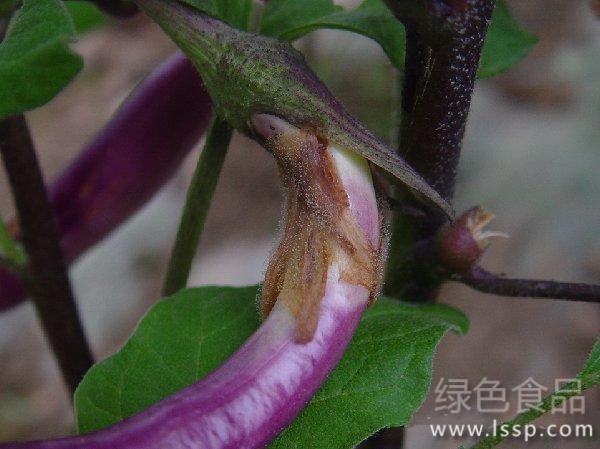
Eggplant Gray Mold
Eggplant gray mold is a fungal disease. The pathogen spreads through air movement, water droplets and farming operations, and invades through plant wounds, stomata or directly. The fungus prefers low temperature and high humidity, and the most suitable period for onset is the flowering and fruit-setting stage; when relative humidity is above 80% the disease begins, and above 90% it enters the peak period. Generally, continuous cropping land, high planting density, poor management, excessive nitrogen fertilizer application and failure to ventilate in time all easily lead to the occurrence, spread and epidemic of the disease.
Prevention and Control Methods
1. Cultivation management measures: adopt high-ridge plastic film cultivation and subsurface irrigation, and do a good job of ventilation and dehumidification to reduce the humidity in the greenhouse; promptly remove diseased fruits and diseased leaves and take them out of the field for proper disposal; after the eggplant vines are pulled up, clean the field and remove diseased plant debris.
2. Timely removal of residual petals and sepals: in combination with farming operations, promptly remove the residual petals and sepals on young fruits to block pathogen infection, which can significantly reduce the rate of diseased fruits.
3. Chemical control: you may choose 50% procymidone wettable powder at 1500 times dilution, 50% iprodione wettable powder at 1000 times dilution, 50% carbendazim wettable powder at 500 times dilution, 80% dimethachlon wettable powder at 1000 times dilution, or 40% pyrimethanil suspension concentrate at 1200 times dilution for spraying; you may also use 10% procymidone smoke agent at 200-250 grams per mu of eggplant each time, or gray mold smoke agent at 150 grams per mu each time, and fumigate with the greenhouse closed at night. The above measures should be applied once every 10 days, with continuous alternating medication 2-3 times.