Improper high-temperature greenhouse sealing fails to kill bacteria: keep these precautions in mind
In the middle of summer, using high-temperature greenhouse sealing can eliminate pathogens, kill insect eggs, clear weeds, and improve the soil. So-called high-temperature greenhouse sealing means disinfecting the vegetable greenhouse from late June to mid-to-late July using the high temperature of the sun and chemical fumigation. When sealing the greenhouse, attention must be paid; some vegetable growers do not pay attention to the details of greenhouse sealing, so the effect is not achieved. Precautions for high-temperature vegetable greenhouse sealing:
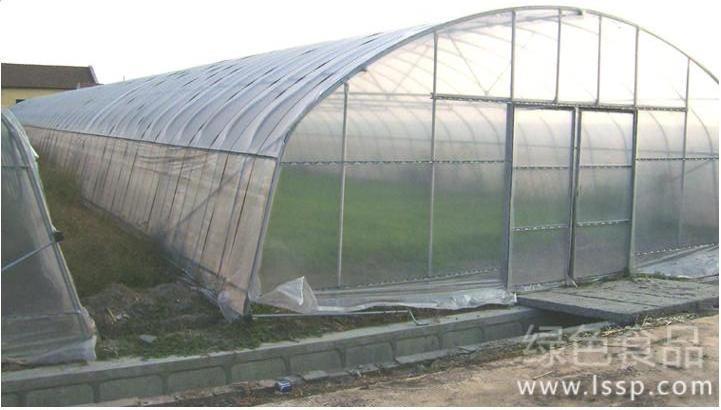
Greenhouse sealing
I. Combine with land preparation, deep plowing and fertilization
The land should be leveled and finely prepared, then deep plowed and fertilized. Combined with land preparation, deep plow organic fertilizers such as chicken manure and pig manure into the ground, using the high temperature to kill pathogens and insect eggs in the organic fertilizer. After deep plowing and raking the land level, then according to the vegetable planting method, form ridges or make high and low beds, so that a small space is formed between the plastic film and the ground, which can enhance the sterilizing effect.
II. Chemical treatment, sterilization and insect killing
For greenhouses where vegetables have died in previous years, use 2-3 kg of carbendazim or 60-100 kg of lime nitrogen per mu, spread it on the ground, deep plow 10-15 cm, then cover with plastic film to disinfect the soil and kill pathogens. In addition, before sealing the greenhouse, spray the inner surface of the greenhouse once more with carbendazim fungicide and insecticide to kill pathogens and pests hiding in the cracks.
III. Sufficient irrigation, increase humidity
The water content of the soil is closely related to the sterilizing effect. Practice has proved that if the soil water content is too low, a good sterilizing effect cannot be achieved. Generally, the effect is best when the soil water content reaches 60% of the maximum field water-holding capacity, and it is advisable for the irrigation water surface to be 3-5 cm above the ground.
IV. Seal the greenhouse, raise the ground temperature
Greenhouse film and plastic film, double-layer covering, maintain the airtightness of the vegetable greenhouse. This treatment method can make the maximum temperature at 10 cm below the ground surface reach 70°C, and the ground temperature at 20 cm reach above 45°C. At such a high ground temperature, the sterilization rate is above 80%.
V. Appropriately extend the greenhouse sealing time
The vast majority of pathogens cannot tolerate high temperatures and can be killed after more than 10 days of heat treatment. For example, some Rhizoctonia solani pathogens, cucumber sclerotinia pathogens, cucumber phytophthora blight pathogens, and eggplant verticillium wilt pathogens are all intolerant of high temperatures. However, some pathogens are particularly tolerant of high temperatures, such as root rot pathogens, clubroot pathogens, and Fusarium wilt pathogens and other deep-rooted soil-borne pathogens. Because the soil layer in which they are distributed is deep, they must be treated for 30-50 days to achieve a relatively good effect. Therefore, when disinfecting the soil, the disinfection time should be determined according to the vegetables planted in the greenhouse and the heat resistance of their corresponding pathogens.
VI. Treatment after greenhouse sealing
High-temperature greenhouse sealing has the best effect on soil no deeper than 15 cm, and a poorer effect on soil deeper than 20 cm. Therefore, after soil disinfection, do not plow again; even if plowing, the depth should be limited to 10 cm. Otherwise, pathogens in the soil below will be turned up, causing recontamination. High-temperature greenhouse sealing can greatly reduce the density of pathogens in the field and greatly reduce the chance of vegetable disease.