How to Increase Pod Set Rate in Green Beans for High Yield
"Dry flowers, wet pods."Water management for green beans should take into account the weather, the soil, and the crop, following the watering principle of "dry flowers, wet pods" and controlling early then promoting later. From emergence to flowering, focus on water control. If soil moisture is good, water only once just before the green beans begin to flower to supply what is needed for flowering, then continue to restrain growth until the early pod stage before giving the first watering. After pods set, the plants grow vigorously, with stems and leaves growing while flowering and fruiting, requiring nutrients and water. At this time, focus on promotion, increase the amount of watering, and keep soil moisture stable at 60%--70% of field maximum water-holding capacity. In the high-temperature season, use methods such as light watering, frequent watering, and watering in the morning and evening.
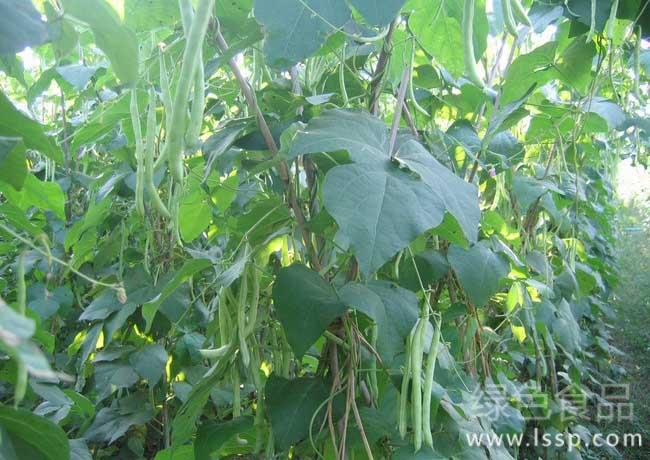
Rational fertilization.On the basis of applying sufficient base fertilizer and light early topdressing, green beans also need 2--3 topdressings during the flower and pod stage to promote pod growth and preserve leaves. Nitrogen fertilizer should be applied in moderation and combined with phosphorus and potassium fertilizers, avoiding excessive nitrogen fertilizer, which causes excessive vegetative growth, leading to flower and pod drop in green beans and affecting the formation of root nodules. For fertilization, mainly use decomposed human manure and barnyard manure, and apply appropriate amounts of superphosphate, potassium chloride, plant ash, etc.
Ventilation and light penetration.To avoid green beans shading each other, greenhouse-grown green beans should use nylon rope trellising for vine hanging, while open-field cultivation should use north-south oriented ""-shaped flower trellises. The planting density of greenhouse-grown green beans should be controlled within 2000 hills. If the density is too high, they shade each other and there is no ventilation, resulting in only vines growing and no pods setting. Promptly remove dead, old, and yellow leaves at the base of green bean plants as well as diseased and insect-damaged branches and leaves, improve ventilation and light penetration conditions, reduce nutrient consumption, and help preserve flowers and pods.
Timely harvesting.Timely harvesting not only ensures that green beans are fresh and tender in quality, but also reduces the burden, helps promote the opening and pod setting of other flowers on the plant, extends the harvest period, and increases the pod set rate. For autumn green beans, when temperatures are high in the early stage, they can be harvested about 10 days after flowering; when temperatures are low in the later stage, they can be harvested 13 days after flowering.
Chemical treatment.During the flowering period of green beans, use 5--25 mmp naphthaleneacetic acid or β-naphthoxyacetic acid, or 2 ppm phosphorus chlorophenol substituted acetic acid, or 5--25 ppm "920" solution to spray the inflorescences, inhibiting abscission layer formation, preventing flower drop, and increasing pod set.