Bagging grapes can improve quality: a detailed explanation of bagging precautions
Bagging grapes can improve their appearance, reduce pesticide contamination, prevent diseases and pests, reduce sunburn, prevent bird damage, and greatly improve grape quality and safety. Grape bagging is generally carried out 25 to 40 days after flowering; when bagging, avoid high-temperature weather after rain and sudden clear skies after overcast and rainy weather. Below are the steps for bagging grapes:
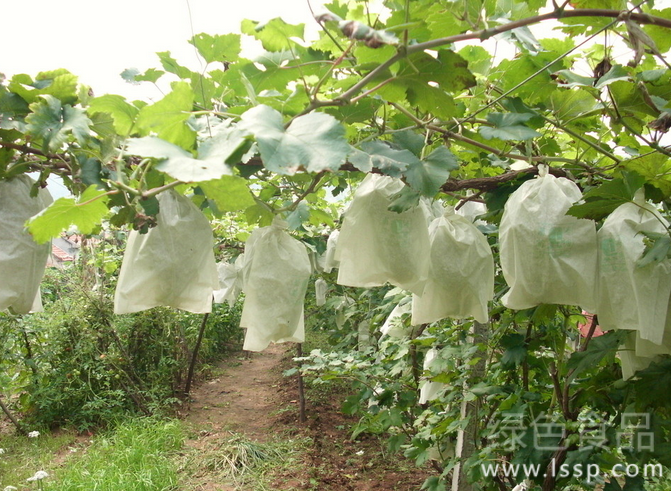
Grape bagging
I. Choose the paper bags.Choose fruit bags with strong wind and rain resistance, good air permeability, high light transmittance, high hydrophobicity, and antibacterial properties, and select different fruit bags according to the different uses of different grape varieties. Generally, green and white grape varieties emphasize antibacterial protection and smooth fruit surfaces, so the light transmittance requirements for the fruit bags are not high, while some colored grape varieties have high requirements for the light transmittance of the fruit bags.
II. Cluster preparation.Before bagging. Thin out small berries and berries that are close together; according to different varieties, determine the amount of fruit to retain, and adhere to the principle of retaining fewer berries for large-berry grape varieties and more for small-berry varieties, so that the final cluster weight is controlled between 400 and 800 grams.
III. Preparatory work.Before bagging, the vineyard must be watered thoroughly once; after the ground dries, bagging can begin. This method can significantly reduce and even avoid sunburn after bagging. If conditions permit, the vineyard should preferably use micro-irrigation. Before bagging, according to local disease conditions and pesticide experience, spray a fungicide once to prevent cluster diseases. Choose water-soluble fungicides, do not use emulsifiable concentrates, otherwise spots are likely to remain on the grape surface. Fungicides such as 40% pyrimethanil 1000-fold solution can be sprayed, and bagging should be done after the liquid dries.
IV. Bagging correctly.First moisten the mouth of the fruit bag with clean water; this method makes the bag opening easier to seal tightly. With the right hand, open the bag mouth, and with the left hand, support the bottom of the fruit bag so that the ventilation and drainage holes on both sides of the bag bottom open and the bag body puffs up. Pull the fruit bag upward from below, place the fruit stalk at the slit at the top of the fruit bag, position the cluster in the center of the fruit bag, and then tie the bag mouth tightly with wire to prevent water from flowing in. Above the wire, leave 1 to 1.5 cm of bag edge. When bagging, never rub the cluster with your hands. After bagging, in high-temperature weather (air temperature above 38°C), open the bottom opening of the fruit bag for ventilation to lower the temperature inside the bag. It is best to complete grape bagging within 7 to 10 days.
V. Removing the bags correctly.This is generally done one week before the grapes ripen, choosing a sunny day before 10 a.m. or after 4 p.m.; on overcast days it can be done all day. In areas where the ripening period has excess [rain], the bags can be removed appropriately earlier to ensure the color of the grapes. When removing the bags, do not remove the fruit bags all at once; first open the bag bottom so that the upper part of the fruit bag forms an umbrella shape and remains on the cluster, which can prevent sunburn and bird damage.