What kind of fungicide is difenoconazole?
What is the fungicide difenoconazole? Please give a detailed introduction. Difenoconazole is also called benzene ring azole. It is a triazole systemic fungicide with a broad fungicidal spectrum, providing lasting protective and curative action against ascomycetes, basidiomycetes, and including Alternaria spp., Ascochyta spp., and certain seed-borne diseases. It is safe for crops and used for seed...
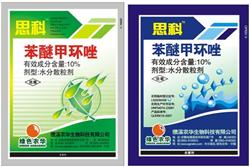
What is the fungicide difenoconazole? Please give a detailed introduction
Difenoconazole is also called benzene ring azole. It is a triazole systemic fungicide with a broad fungicidal spectrum, providing lasting protective and curative action against ascomycetes, basidiomycetes, and including Alternaria spp., Ascochyta spp., and certain seed-borne diseases. It is safe for crops and used for seed coating, with no adverse effects on seedlings, shown as fast emergence and uniform emergence, which differs from agents such as triadimefon. Both seed treatment and foliar spraying can increase crop yield and ensure quality.
Fruit tree diseases: To control pear scab, generally use a 10% water-dispersible granule at 6000-7000 times dilution; for severely affected pear orchards, a 3000-5000 times dilution is recommended. For protective control, spray once every 7-10 days from new shoots to the 10 mm young fruit stage.
Vegetable diseases: To control Chinese cabbage black spot, use 35-50 grams of 10% water-dispersible granule per mu, diluted with water for conventional spraying.
Cereal diseases: Mainly seed treatment. Because the agent can enter the interior of the seed, it is effective against both seed-borne and soil-borne diseases. Use a 3% suspension seed coating agent for simple farmer seed dressing and coating or mechanized seed dressing and coating in the seed industry. The amount of 3% suspension seed coating agent per 100 kg of wheat seed is: 200-400 mL for wheat smut, and 200 mL for wheat root rot, sheath blight, and glume blotch.
To control soybean root rot, use 200-400 mL of 3% suspension seed coating agent per 100 kg of seed for seed coating.
In other countries, difenoconazole is also used on rice, peanut, potato, celery, flowers, and other crops.
Difenoconazole should not be mixed with copper preparations. If mixing is truly necessary, the amount of difenoconazole used must be increased by 10%. It is toxic to fish; do not pollute water sources.
Click to get more fungicide application techniques
Click to get more pesticide application techniques