How to prevent and control scab, to which green plums are prone in rainy July
Green plum scab is a fungal disease. Its pathogen overwinters as ascospores or mycelium on fallen diseased leaves or diseased parts of branches. In April of the following year, it produces spores, which are spread by rainwater to leaves or fruit. Fruit begins to show symptoms in early May, and the disease becomes epidemic in July. If it is a rainy year, the disease is more severe, so timely prevention and control should be carried out at the right time.
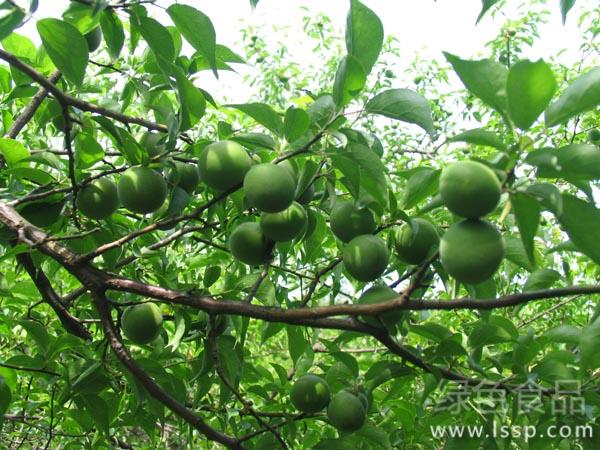
Green plum
I. Disease symptoms
Green plum scab mainly occurs on branches, leaves and fruit. When leaves are infected, small reddish-brown spots first appear, then enlarge into round spots or fall off; when branches are infected, the lesions on green branches are also reddish-brown or turn dark red, with a gray center; when fruit is infected, round dark green to dark brown spots form from around the stem end to the shoulder of the fruit. The diseased part does not extend deep into the flesh and is slightly raised, and several lesions may also cluster into a mass with cracks on the surface. After the fruit ripens or is harvested, the lesions gradually become shriveled.
II. Control methods
1. In winter, prune off diseased branches, dead branches, shade branches and densely growing branches and burn them to improve ventilation and light penetration.
2. Before flowering, spray lime sulfur mixture or 500-fold diluted Lishengfu suspension concentrate for control.
3. In the early stage of green plum scab, spray 800-1000-fold diluted 40% Haodeli wettable powder or 4000-5000-fold diluted 25% Yebanqing emulsifiable concentrate, once every 10 days, for 2-3 consecutive sprays; 600-800-fold diluted 70% thiophanate-methyl wettable powder can also be used for control.