Summer high temperatures easily cause chili pepper root burn: how to diagnose and treat chili pepper root burn
Chili pepper root burn occurs mainly at the seedling stage and the mature plant stage. When root burn occurs, the root tips turn yellow and no new roots form; in the early stage the roots generally do not rot, but the chili pepper grows slowly, the plant is short and brittle-hard, forming small old seedlings. Some chili peppers begin to suffer root burn at the seedling stage, but it only becomes apparent in the high-temperature season of July-August. Chili pepper plants with mild root burn wilt at noon and can still recover in the morning and evening; in the later stage, due to high temperatures and insufficient water supply, the plants dry up, resembling bacterial wilt or Fusarium wilt, but when the chili pepper stem is cut lengthwise, no abnormality is seen, which distinguishes it from the above two diseases.
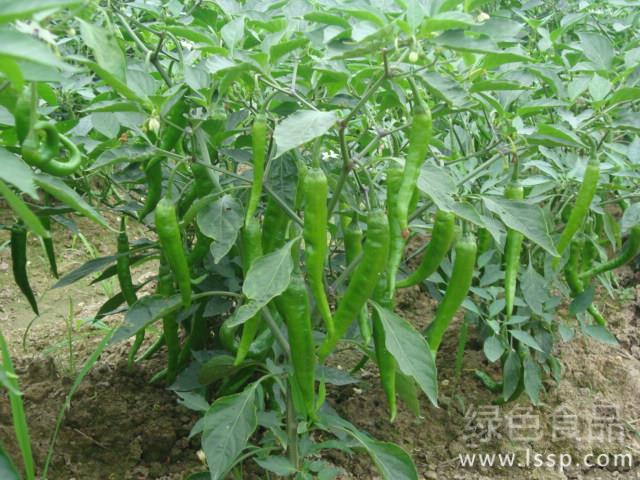
Chili pepper
Causes:It is mainly caused by applying excessive amounts of incompletely decomposed organic fertilizer, especially applying incompletely decomposed chicken manure, or applying it under conditions of insufficient soil water supply; chili peppers are then more prone to root burn.
Control measures:
1. Formulated fertilization: apply compost fermented with effective microorganisms or biological organic compound fertilizer, which can be prepared with human and animal manure and urine; it is best not to use chicken manure, and if it must be used, it must be fully decomposed. The formula ratio is: for every 1000 kg of chili pepper fruit produced, 4.5 kg of nitrogen, 1.04 kg of phosphorus, and 5.5 kg of potassium are needed; each place can adjust up or down according to local conditions.
2. Application of Huimanfeng multi-element compound organic active liquid fertilizer is recommended, using 450 ml per mu, diluted 400 times, or Yunda-120 plant growth regulator at 3000 times, sprayed on leaves 3 times.
3. When root burn has already occurred, increase the amount of irrigation to reduce the concentration of the soil solution.
4. For chili pepper fields using plastic film mulching, the film should be gradually broken open after entering the high-temperature season to prevent excessively high soil temperature; when necessary, increase ventilation or water to lower the temperature.