July ginger is prone to pests and diseases: key management points for ginger over the summer
After entering July, midsummer arrives, and daytime temperatures often reach above 30°C, while the suitable temperature for ginger growth is around 25°C. Excessive temperature and light intensity cause physiological disorders in ginger. Moreover, after July, northern regions enter the flood season, with more overcast and rainy weather, which easily triggers the outbreak and spread of various diseases. The following introduces the key management points for ginger during midsummer.
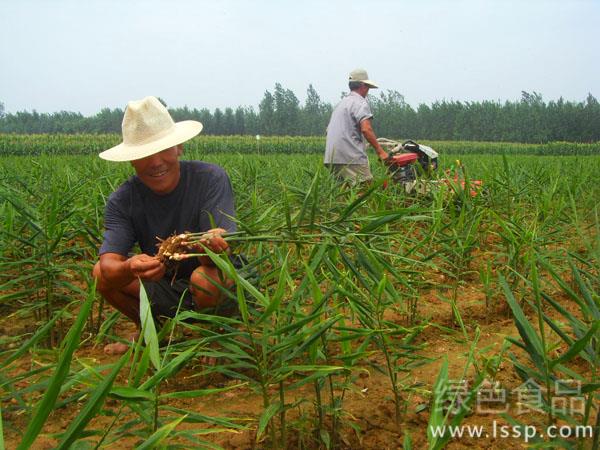
Ginger summer management
1. Remove the plastic film in time.The main role of plastic film mulching is to raise temperature and preserve soil moisture in the early stage. After ginger enters the "three-pronged fork" stage, the main management measures are cooling, watering and fertilizing. At this time, the plastic film not only fails to help but also brings great disadvantages. Too high soil temperature affects the expansion of ginger rhizomes and also affects root penetration downward. The plastic film reflects sunlight, which heats and scorches the leaves, affecting the normal growth of the plants. Plastic film mulching affects watering, fertilizing and spraying, bringing great inconvenience to field management.
2. Supply sufficient fertilizer and water.After the "three-pronged fork" stage of ginger, the ginger rhizomes enter a rapid expansion period. This period is also the period of large demand for water and fertilizer for ginger. Every 15 days, apply potassium sulfate compound fertilizer with irrigation once, for a total of three applications, each time 30 kg per mu, with high-potassium compound fertilizer being preferable.
3. Control diseases in time.The main diseases include anthracnose, leaf spot, leaf blight and bacterial diseases. Root diseases include stem base rot, root rot, ginger blast, etc. To control leaf diseases, choose Amistar 10 ml + Copper High 35 ml mixed with 15 kg of water, spray for control, and spray again after 15 days. Using this method for root irrigation can control root diseases such as ginger stem base rot, ginger blast and root rot.
4. Control insect pests in time.The older the pest instar, the stronger the resistance to pesticides and the more difficult the control. Therefore, it is essential to adhere to the principle of "early control, controlling both eggs and insects." The more damaging pests on ginger include ginger stem borer (shoot borer), beet armyworm, tobacco cutworm, thrips, tobacco whitefly, etc. You can choose 20% Coragen; mix 10 ml of Coragen with 15 kg of water evenly and spray for control, spraying once every 15 days.