Pepper anthracnose outbreaks cause yield loss, how can it be effectively controlled?
Pepper anthracnose is fairly common and frequent, mainly affecting ripe peppers and old leaves. In addition, it can also harm eggplants and tomatoes. In protected cultivation, a high-temperature and high-humidity environment favors the occurrence and spread of anthracnose, and when the disease is severe, it can reduce pepper yield by 20%-30%.
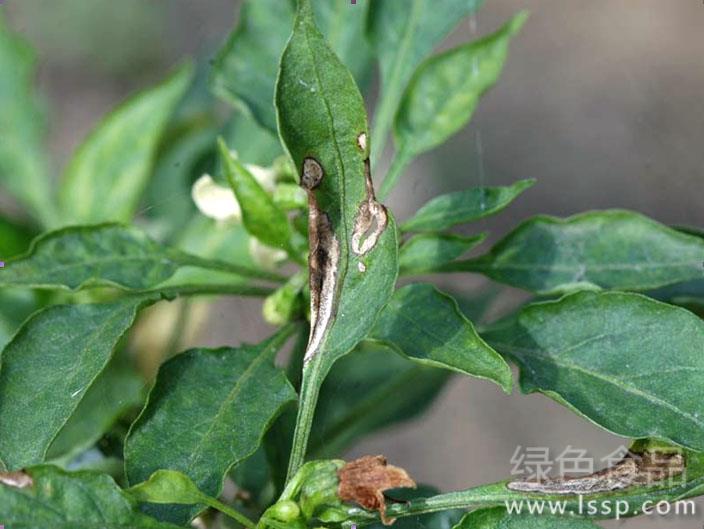
Pepper anthracnose
I. Disease symptoms:
In the early stage of pepper infection, there are water-soaked round or irregular lesions, with a grayish-brown center, which then become sunken, with raised concentric rings densely covered with small black dots. When dry, the lesions shrink, appearing parchment-like, and easily crack; when moist, a pale red sticky substance oozes from the lesions. When leaves are affected, they initially show chlorotic water-soaked spots, later with dark brown edges and a grayish-white center, and small black dots arranged in rings on the lesions; diseased leaves easily shrink and drop off. When pepper stems and fruit stalks are infected, irregular brown lesions appear, slightly sunken, and easily crack when dry.
II. Control methods:
1. Seed disinfection: Save seeds from disease-free fields or disease-free pepper plants, and before raising seedlings, the seeds must be disinfected. They can be soaked in warm water at 55°C, then germinated and sown. Alternatively, soak pepper seeds in cold water for 6-10 hours, then soak in 1% copper sulfate solution for 5 minutes, remove them, wash in 1% soapy water for 5 minutes, rinse clean with clear water, and then germinate and sow.
2. Practice crop rotation: Avoid continuous cropping with crops such as tomatoes and eggplants.
3. Strengthen pepper seedling-stage and field management: Use nutrient pots for seedling raising to protect the root system and prevent pathogens from invading through pepper wounds. Plant at a reasonable density and control suitable temperature and humidity. Apply more manure and rationally combine phosphorus and potassium fertilizers to improve the disease resistance of pepper plants. Apply timely topdressing during the fruiting period; 0.2% potassium dihydrogen phosphate or a mixed solution of 0.2% potassium dihydrogen phosphate plus 0.5% urea can be used for foliar topdressing. Remove diseased leaves and diseased fruits promptly and bury them deeply or burn them.
4. Chemical control: During the pepper fruit-setting period, spray Bordeaux mixture at 1:1:200 or 0.3% copper sulfate solution to prevent the disease. In the early stage of the disease, choose 75% chlorothalonil wettable powder at 500-600 times dilution, or 50% carbendazim at 600-800 times dilution, or 70% thiophanate-methyl wettable powder at 1 000 times dilution, or 50% thiram wettable powder at 500 times dilution, or 65% zineb at 500 times dilution, spraying once every 5-7 days, for 2-3 consecutive sprays. If after pepper transplanting, spray with 0.2% potassium dihydrogen phosphate plus 1% soapy water once every 7-10 days, for 2-3 consecutive applications, it is also beneficial for the control of anthracnose.