Bitter melon turns orange-red when mature and develops red stems: how to prevent and control it?
Generally, bitter melon only turns orange-red after it matures, but in some greenhouse bitter melons, even young fruits that have set for only a week develop "red stems"? Below, let's analyze the causes of "red stems" appearing on young bitter melon fruits and the prevention methods:
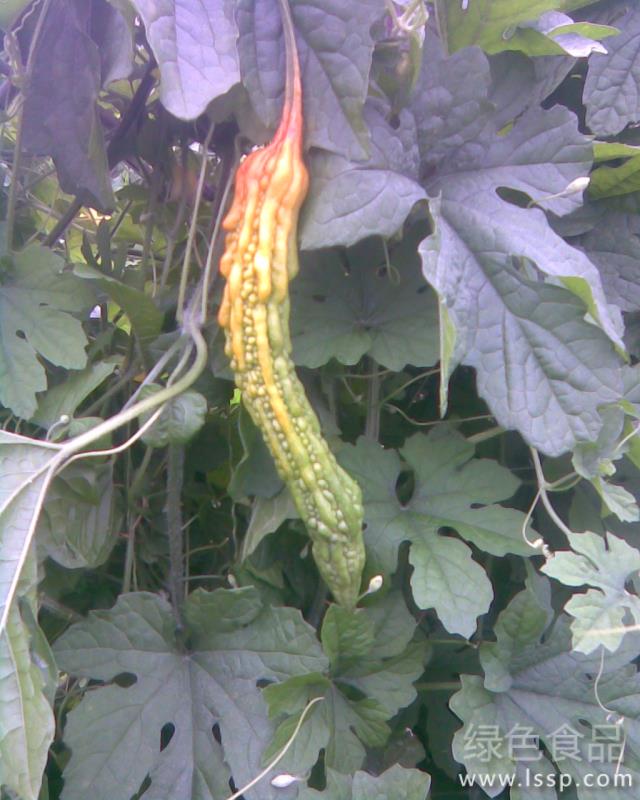
Red stems in bitter melon
First, high temperatures.One important cause of red stems on young bitter melon fruits is that the temperature inside the greenhouse is too high in summer. High temperatures can accelerate the speed at which bitter melon matures and ages, thereby causing red stems. If the temperature inside the greenhouse exceeds 35°C for a long time, young bitter melon fruits are prone to developing red stems in large numbers. Therefore, in summer, every effort must be made to lower the temperature inside the greenhouse. For example, spray mud slurry onto the greenhouse film and set up shade nets.
Second, direct strong sunlight.When the temperature is too high, excessive leaf thinning will worsen the occurrence of red stems in bitter melon. Therefore, in summer, in addition to ensuring shade measures are in place, try not to thin out branches and leaves, so as to avoid bitter melon being exposed outside the branches and leaves and suffering direct sunlight.
Third, drought.Bitter melon likes moisture. If the greenhouse is relatively dry, it will also promote the occurrence of red stems on young bitter melon fruits. Especially after summer begins, some vegetable growers still do not remove the plastic film, and the air inside the greenhouse is dry, which worsens the occurrence of red stems in bitter melon. Therefore, in summer, in addition to watering frequently in the greenhouse soil to prevent drought, the plastic film should also be removed in time to increase the air humidity inside the greenhouse.