Grape black pox disease is prone to occur in rainy weather, detailed explanation of control methods
Grape black pox disease, also known as scab disease, commonly called bird's eye disease, is one of the main diseases in grape cultivation, affecting the green tender parts of the grape, such as fruit, fruit stalks, leaves, leaf stalks, new shoots and tendrils.
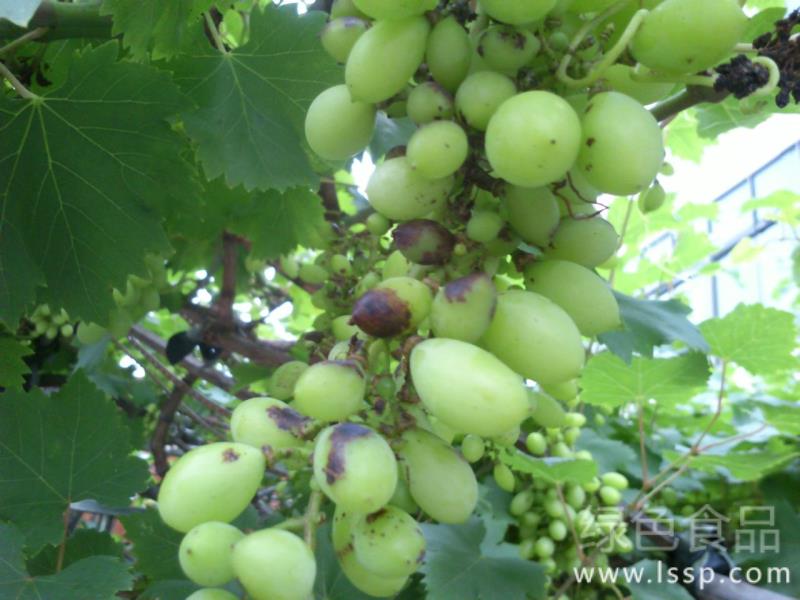
Grape black pox disease
The occurrence of grape black pox disease is closely related to rainfall, atmospheric humidity and the tenderness of the grape plant, with rainfall having the greatest impact. Rainy and high-humidity conditions favor the formation, spread and germination of conidia, which invade the tender tissues of the grape and grow rapidly, causing severe disease occurrence.
To control grape black pox disease, the inoculum source should be reduced, disease-resistant grape varieties should be selected, field management should be strengthened, and chemical control should be combined.
Disinfection of seedlings.Since the long-distance spread of black pox disease occurs mainly through infected grape seedlings or cuttings, when establishing a vineyard, disease-free seedlings should be selected, or the seedlings should be disinfected beforehand.
Thorough orchard cleaning.The primary infection of black pox disease mainly comes from mycelium that overwinters on grape diseased residues. Therefore, in winter, orchard cleaning should be done well to reduce the amount of inoculum for primary infection the following year, which helps slow down the disease. During winter pruning, cut off diseased branches, shoots and remaining diseased fruits of the grape, scrape off diseased and old bark, and thoroughly remove dead branches, fallen leaves and rotten fruits in the vineyard.
Use disease-resistant grape varieties.Different grape varieties differ significantly in resistance to black pox disease. Before establishing a vineyard, local production conditions and technical level should be considered, and grape varieties with high commercial value and good disease resistance should be selected according to local conditions.
Strengthen management.In addition to good sanitation and reducing inoculum sources, various field management measures should be carried out promptly, especially fertilizer and water management. Before establishing a vineyard and after harvest, trenches should be opened and sufficient organic fertilizer applied to maintain strong grapevine vigor; for topdressing, a complete fertilizer containing nitrogen, phosphorus, potassium and trace elements should be used, avoiding single or excessive application of nitrogen fertilizer. For vineyards converted from flat land or paddy fields, drain water promptly after rain to prevent waterlogging. Timely inter-row weeding, shoot tipping and vine tying, etc., should be done to give the vineyard good ventilation and light transmission and reduce field temperature. These measures all help strengthen the resistance of grape plants and are unfavorable for pathogen infection, growth and reproduction.
Chemical control.In addition to orchard cleaning and overwintering control, during the growing season, spray 1:0.7:250 Bordeaux mixture once each before and after grape flowering, which plays a key role in controlling grape black pox disease. In June-July, 25% azoxystrobin 1000-fold solution or 40% flusilazole 8000-fold solution can be sprayed, once every 10-15 days, for 2-3 consecutive sprays.