How to manage rice after it suffers from flooding
After rice suffers from flooding, drain the standing water promptly, lift and wash the seedlings, strengthen field management, apply quick-acting fertilizer, spray pesticides to prevent diseases and control insect pests, promote the rice seedlings to return to normal growth, and reduce the flood damage to rice to the lowest possible level.
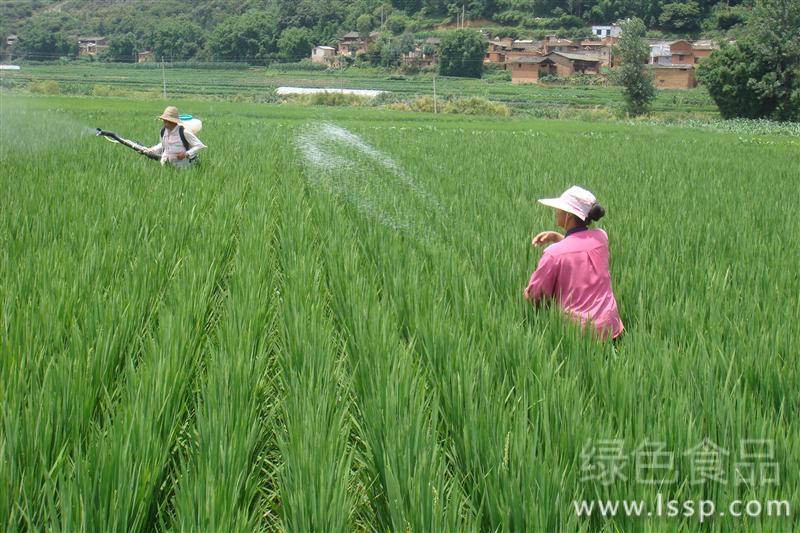
Rice management
(1) Drain the standing water as early as possible.After waterlogging, quickly organize manpower and concentrate drainage equipment to carry out drainage and rescue. Drain the high fields first, so that the tips of the rice leaves emerge above the water as early as possible, reduce the number of days the rice is submerged, and reduce losses. Note that when draining, under high temperature and strong sunlight, the water in the rice field must not be drained all at once; retain an appropriate amount of water to supply the rice's needs. If the field water is drained all at once, the rice is prone to wilting, which worsens losses. In overcast and rainy weather, the field water can be drained all at once, which helps the rice recover.
(2) Strengthen field management.First, dig drainage ditches around the rice fields (especially low-lying fields), so that the root systems of submerged rice can resume growth as quickly as possible. On overcast days, the standing water in the whole field can be drained all at once, but under high temperature and strong light, the standing water in the field must be drained gradually, retaining an appropriate water layer; drainage is best done in the evening, which helps the rice resume growth. If drained all at once, because the rice has been immersed in water for a long time, its vitality is weak and its stems and leaves are soft, so when it encounters clear skies and strong sunlight it is prone to wilting, which worsens losses. Use the dry-wet alternating irrigation method, which both maintains the water the rice needs and ensures soil aeration. For late-sown and late-maturing rice fields, continue to expose and sun the field to control ineffective tillering; for rice fields that have entered the booting and heading stage, maintain a shallow water layer to nourish the boot and protect the panicle; for rice fields that have fully headed and are filling, use alternating dry and wet irrigation, and by no means cut off water too early, so as to increase the rice's seed-setting rate and 1000-grain weight.
Second, when the water recedes, remove floating debris. Lift up lodged rice plants one by one. Clean the mud off the leaves so that the rice can resume photosynthesis and respiration as quickly as possible.
Third, for rice fields that have just emerged from the water, open ditches to expose the field, and combine this with irrigating shallow water and applying supplementary fertilizer. After rice emerges from being submerged, its roots, leaves and tillers need to resume growth, so a large amount of nutrient elements and minerals must be supplemented; in addition, the flooded rice fields have lost much fertilizer, so topdressing should be done quickly and in sufficient amount to promote the rice to resume growth as quickly as possible. Fertilization should focus on quick-acting fertilizers, and different fertilization methods, fertilizer types and amounts should be used according to the different growth stages of the rice. When 20% of the rice has headed, to promote uniform heading, 0.5-1 g of "920" can be sprayed per mu; during the grain-filling stage, to help increase the rice's seed-setting rate and 1000-grain weight, 50-100 kg of 0.2% potassium dihydrogen phosphate solution can be sprayed per mu, once every 5-7 days, for 2-3 consecutive sprays. For rice fields submerged during the booting and grain-filling stage, after drainage it is advisable to supplement with foliar fertilizer; after full heading, 150 g of potassium dihydrogen phosphate, 250 g of urea and 5 ml of plant protectant can be mixed with 50-60 kg of water per mu for root-outside topdressing, to increase the 1000-grain weight.
(3) Integrated control of diseases and insect pests.After a rice field is submerged, the rice plants lack oxygen and the level of acetates in the rice plant increases; at the same time, during submersion the rice plants are damaged and there are many dead leaves, so at this time the rice is susceptible to damage from sheath blight, rice blast, bacterial leaf blight, bacterial leaf streak, brown planthopper, rice leaf roller and other diseases and insect pests. Therefore, attention must be paid to the control of the above diseases and insect pests, to reduce the disease and insect damage caused by floods and waterlogging as much as possible, and to reduce the flood damage to rice to the lowest possible level.
(4) Seize the time to replant or change crops.For fields with total crop failure due to floods and waterlogging, seize the time to replant or change crops, to ensure more planting and more harvest and make up for disaster losses. For submerged and killed middle-season and late-season rice fields, while actively organizing the adjustment and exchange of seedlings, replant rice, and promptly do a good job of turning early rice into autumn rice, expanding rice planting as much as possible. Turning early rice into autumn rice can adopt two methods: transplanting for autumn and direct seeding for autumn. For autumn rice seed, it is best to choose early-maturing or early-to-medium-maturing rice varieties. For transplanting for autumn, rush to sprout and sow before July 5, control the seedling age at 15-18 days, practice close planting in small clumps, transplant shallowly and evenly, and transplant enough to reach 250,000-300,000 basic seedlings per mu. For direct seeding for autumn, rush to prepare the field and open the beds before July 10, soak the seed in warm water, sow after the seed breaks its hull, and ensure 300,000 basic seedlings per mu. If the season is too tight, switch to sweet potato, soybean, peanut, vegetables, etc., and increase planting density and strengthen fertilizer and water management.