Bean leaves going moldy is mostly due to gray mold; how should it be prevented and controlled?
In kidney beans grown in greenhouses and other protected cultivation, gray mold causes serious damage. First, cloud-patterned spots appear starting about 15cm up from the root stem of the kidney bean, dark brown around the edges and light brown to pale yellow in the middle. When dry, the surface of the spots cracks and becomes fibrous; when humid, a layer of gray fuzzy mold grows on the spots. When the disease occurs at the branching points, small water-soaked spots form, become sunken, and then the plant wilts. When the cotyledons of kidney bean seedlings are affected, they become water-soaked, soft and drooping, and gradually white-gray mold appears along the edges of the cotyledons. During the pod-setting stage, when kidney bean flowers fade, high humidity infects the wilting corollas, causing pod drop in kidney beans. When leaves are infected, irregular dark brown large spots 1-2cm in size with a water-soaked appearance appear.
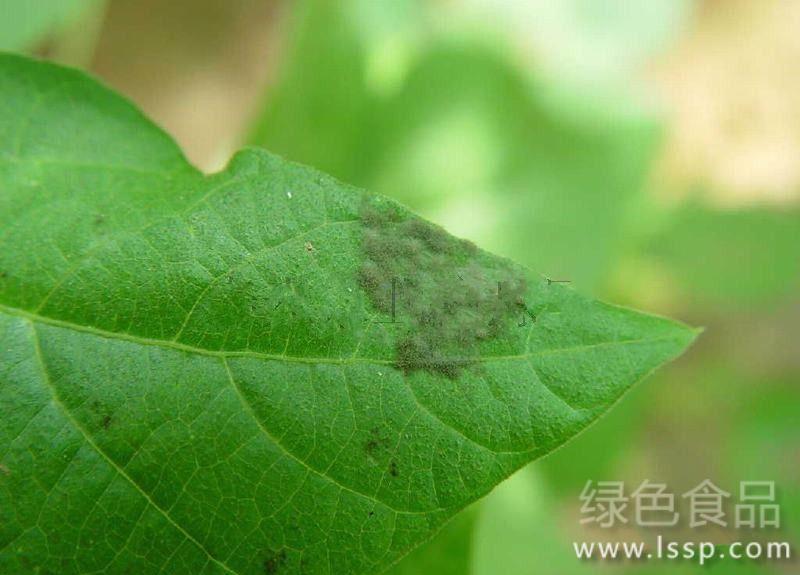
Gray mold
Infection. The pathogen of kidney bean gray mold is the same as that of tomato and cucumber. The conidia are clustered, colorless and single-celled, with greatly differing ends, shaped like water droplets. The conidiophores are light brown with many septa. Under suitable temperature and humidity, the gray mold pathogen produces large numbers of sclerotia. The sclerotia have strong stress resistance and survive for a long time; once suitable temperature and humidity occur again, they grow hyphae or conidiophores and directly infect kidney bean plants, spreading the damage. This fungus spreads with diseased plant residues, water flow, airflow, and farm tools and clothing. Rotten diseased fruits, diseased leaves, diseased tendrils, and fallen diseased flowers that land on healthy parts of the kidney bean can cause disease.
Conditions for occurrence. Hyphae can grow at 4-32°C, with the optimum temperature 13-21°C. The temperature range for the pathogen to produce spores is broad; spores can be produced at 1-28°C, with the optimum temperature 21-23°C. When the relative air humidity is above 90%, spores disperse and spread the disease. The temperature for spore germination is 5-30°C, with the optimum temperature 13-29°C. Spore germination requires relatively high humidity; when humidity is below 90%, spores do not germinate. Pathogen infection generally first weakens the resistance of the diseased part of the host, and then causes the kidney bean to rot and go moldy. In winter warm greenhouse production, as long as air humidity is high and the temperature is around 20°C, gray mold is extremely prone to becoming epidemic.
Prevention and control. Gray mold spreads quickly, has a relatively long incubation period, and easily develops drug resistance, making it difficult to control; it requires combining agricultural control with chemical control. Strengthen environmental regulation under greenhouse conditions, apply water and fertilizer at the right time, strengthen ventilation to remove moisture, and keep the temperature suitable, which helps control the occurrence and spread of the disease. Promptly remove diseased leaves and diseased pods by hand, take them outside the greenhouse and thoroughly destroy or bury them deeply. When scattered diseased leaves appear on kidney beans, spray to control. Commonly used agents include 50% Speedling wettable powder at 1 000-1 500 times dilution, or 50% iprodione wettable powder at 1 000-1 200 times dilution, once every 5-7 days, spraying 2-3 times consecutively. According to trials, dusting is more effective than spraying, with lower investment and longer duration; using 5% wanmeiling, dusting 1.5 kilograms per mu can control the disease.