Bud removal and pinching, short cutting and thinning: summer pruning methods for kiwifruit
Summer pruning of kiwifruit is carried out from early August to early September. The pruning methods mainly consist of the following four points:
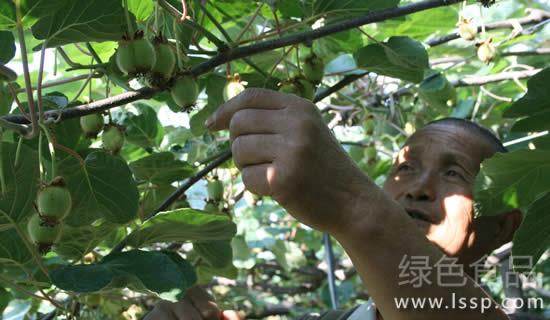
Pinching of kiwifruit
Bud removal:Continue to remove all vigorous water sprouts arising from the base of the kiwifruit plant, especially those on the rootstock that were not thoroughly removed when buds broke in spring; at the same time, newly sprouted buds around pruning and saw cuts from the previous winter pruning, sprouts emerging from densely foliated areas within the kiwifruit canopy, and all axillary buds emerging below the first node of the current year's bearing shoots must all be removed.
Pinching:In summer, kiwifruit has strong growth vigor, grows very fast, and produces a large amount of growth, so there are many shoot tips that need pinching. These mainly include: first, for the vigorous vegetative shoots of reserve shoots sprouting from permanent canes, pinch at 80cm; second, for vigorous fruiting shoots and long fruiting shoots, pinch at the 7th--8th leaf above the last kiwifruit; third, for fruiting mother canes and vegetative shoots with strong growth vigor, pinching should be done according to different situations. Generally speaking, secondary shoots are pinched after retaining 3--4 leaves, and tertiary shoots are pinched after retaining 2--3 leaves.
Short cutting:During summer pruning of kiwifruit, in general, shoots are rarely short cut. However, for vigorous fruiting shoots and long fruiting shoots missed during pinching, they should be short cut at the 7th--8th leaf above their fruiting position; at the same time, excessively long vegetative shoots that shade light heavily may also be appropriately short cut.
Thinning:Summer thinning of kiwifruit mainly involves removing all water sprouts sprouting from the base, some vigorous vegetative shoots sprouting from permanent main canes, and all diseased and pest-infested shoots; appropriately thinning overly dense shoots, weak shoots, mechanically injured shoots, and some fruiting shoots sprouting from temporary mother canes. In addition, shoots bearing too many fruits, shoots with weak growth vigor, or downward-facing fruiting shoots near the ground that hinder ventilation and light penetration should also be thinned as appropriate. Summer thinning should be done early, generally when new shoots are 30--40 cm long.