What is the function of fungicides and what is their sterilization principle?
What are the functions of fungicides and how should they be used? Please give an introduction. There are two modes of action of fungicides: one is protective fungicides, and the other is systemic fungicides. Protective fungicides directly contact the pathogenic bacteria outside the plant body or on the body surface, killing or inhibiting the pathogenic bacteria, making it impossible for them to enter the plant, thereby protecting the plant...
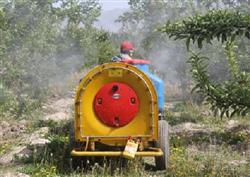
What are the functions of fungicides and how should they be used? Please give an introduction.
There are two modes of action of fungicides: one is protective fungicides, and the other is systemic fungicides. Protective fungicides directly contact the pathogenic bacteria outside the plant body or on the body surface, killing or inhibiting the pathogenic bacteria, making it impossible for them to enter the plant, thereby protecting the plant from the harm of pathogenic bacteria. This type of fungicide is called a protective fungicide, and its effect has two aspects: one is that after spraying, the agent contacts the pathogenic bacteria and directly kills them, that is, "contact fungicidal action"; the other is that the agent is sprayed on the surface of the plant body, and when the pathogenic bacteria land on the plant body and contact the agent, they are poisoned and killed, which is called "residual fungicidal action." Protective fungicides mainly include the following categories: sulfur and inorganic sulfur compounds, such as sulfur suspension concentrate, solid lime sulfur mixture, etc.; copper preparations, mainly Bordeaux mixture, copper ammonia mixture, etc.; organic sulfur compounds, such as thiram, zineb, amobam, mancozeb, etc.; phthalimide types, such as captan, difolatan, and folpet, etc.; antibiotic types, such as jinggangmycin, blasticidin, polyoxin, etc.; other types, such as yekuling, yekujing, chlorothalonil, and fusilazole, etc.
Systemic fungicides can be absorbed by the crop after being applied to a certain part of the crop body, and are transported within the body to other parts of the crop body to take effect. Fungicides with this property are called "systemic fungicides." Systemic insecticides have two modes of translocation: one is acropetal translocation, that is, after the agent is absorbed into the plant body, it is transported with the transpiration stream to the top of the plant to the top leaves, terminal buds, leaf types, and leaf margins. Most current systemic fungicides belong to this category. The other is basipetal translocation, that is, after the agent is absorbed by the plant body, it is transported downward in the phloem along the transport of photosynthesis products. Fewer systemic fungicides belong to this category. Some fungicides such as fosetyl-aluminum can translocate in both upward and downward directions. Systemic fungicides mainly include the following categories: benzimidazole types, such as benomyl, carbendazim, thiabendazole, thiophanate and thiophanate-methyl, etc.; dicarboximide types, such as iprodione, vinclozolin, etc.; organophosphorus types, such as kitazine, iprobenfos, fosetyl-aluminum, etc.; phenylamide types, such as metalaxyl, etc.; sterol biosynthesis inhibitor types. Such fungicides include tridemorph, triforine, dimethirimol and ethirimol, imazalil and prochloraz, triadimenol and triadimefon, etc. From the perspective of chemical structure, they respectively belong to morpholine, pyrazine, pyridine, pyrimidine, imidazole, and 1,2,4-triazole compounds. Sterol synthesis inhibitor fungicides have both protective and therapeutic effects, and have a relatively broad fungicidal spectrum.
The principle of fungicides in controlling plant diseases: Simply put, fungicides are compounds that have toxic-killing effects on pathogenic microorganisms. However, the meaning of the term "fungicidal" is not limited to the two meanings of "killing" pathogenic microorganisms or spore germination. Fungicides that can kill pathogenic microorganisms exert a fungicidal effect, and fungicides that can inhibit the germination or growth of pathogen spores exert a fungistatic effect. Both effects can achieve the purpose of disease prevention and treatment in agricultural production. Fungicides have different modes of action and different methods of use, but fundamentally, the principles of fungicides in controlling diseases are no more than three: chemical protection, chemical therapy, and chemical immunization.
Chemical protection is spraying fungicides before plants become diseased to prevent the occurrence of plant diseases. It means "sending the falcon before seeing the rabbit." Among common fungicides, some fungicides only have protective measures. Generally there are two types: one is to apply the agent at the source of the pathogenic bacteria to eliminate the infection source. The sources of pathogenic bacteria mainly include places where pathogens overwinter, intermediate hosts, and soil, etc. The purpose of eliminating or reducing infection sources by applying fungicides is to reduce the possibility of pathogenic bacteria infecting crops. For example, clearing weeds in orchards in winter to eliminate overwintering pathogens; seed disinfection and soil disinfection and other specific means all belong to this type of chemical protection measure. The second is to spray fungicides on crop bodies that are growing in the field, not yet diseased, and may be infected by pathogenic bacteria, to prevent infection by pathogenic bacteria. After the crop surface is sprayed with fungicide, it can have a toxic-killing effect on pathogen cells or spores that come to infect the crop. To prevent infection of crops by soil-borne pathogenic bacteria, treating crop seeds with fungicides before sowing or treating seedling roots with fungicides before transplanting both belong to this type of measure.
Chemical therapy means "sending the falcon only after seeing the rabbit." That is, after plants become diseased or susceptible to disease, fungicides are applied so that they act on the protected crop or on the pathogenic bacteria, changing the pathogenic process of the pathogenic bacteria, thereby achieving the purpose of reducing or eliminating the disease. Prevention is more important than treatment, and the effect of disease prevention is also better than the effect of disease treatment. Therefore, the plant protection policy of "prevention first, integrated control" proposed by China's plant protection science and technology workers is highly guiding. According to the degree of pathogen infection of plants and the method of application, chemical therapy can be divided into three types: one is surface chemical therapy. Some pathogens, such as powdery mildew pathogens, mainly attach to the surface of the plant body. Using lime sulfur mixture can kill the pathogens and play a surface therapeutic role. Non-systemic fungicides can control such diseases. One is internal chemical therapy, which introduces fungicides into the crop body to treat pathogens that have already invaded the interior of the plant body. Only systemic insecticides, such as thiophanate-methyl, carbendazim, etc., have internal chemical therapeutic effects. The effect of systemic fungicides for internal therapy has two aspects: on the one hand, they directly produce toxicity to the pathogens; on the other hand, they change the plant's metabolism, change its response to the pathogens, or change the pathogenic process of the pathogens. However, most systemic fungicides have only one of these effects, and some fungicides have both effects. One is external chemical therapy. The "surgical therapy" often used in controlling fruit tree or forest diseases is external chemical therapy. That is, the diseased spots on the trunk or branches after infection by pathogens are scraped off, the wounds are then disinfected with fungicides, and protective agents or waterproofing agents are applied to prevent further expansion of the infection.
Chemical immunization is the use of chemical substances to enable protected crops to acquire resistance to pathogenic bacteria. At present, relatively confirmed compounds with chemical immunization functions include 2,2-dichloro-3,3-dimethylcyclopropanecarboxylic acid, fosetyl-aluminum, and probenazole, three compounds. Among them, probenazole is the most typical chemical immunizing agent. Treating rice plants with it can induce the production of several antibacterial substances and enable rice to acquire resistance to rice blast.
There are many methods of using fungicides, and each method of use is designed according to the patterns of disease occurrence. Common methods of use mainly include three: spraying crops above ground in the field, soil disinfection, and seed disinfection.
For spraying crops in the field, the factors affecting the field disease-prevention effect of fungicides are no more than three aspects: the agent, the environment, and the crop. However, fungicides have higher requirements in application technology than insecticides and herbicides, especially the need to fully understand the patterns of disease occurrence and development, because the occurrence and development of diseases are not as obvious at a glance as insect pests and weeds. When spraying field crops, two points should be noted: first, the type and concentration of the agent. The choice of agent type is determined by the type of disease, so a correct diagnosis of the disease type must first be made, and then the right medicine can be applied. For example, rice blast can choose kitazine, isoprothiolane, tricyclazole, etc.; wheat powdery mildew and rust should choose triadimenol, triadimefon, etc.; peanut leaf spot should choose thiophanate-methyl, etc. However, it should also be noted that if the same disease occurs on different crops, sometimes the same agent cannot be used. For example, Bordeaux mixture can control downy mildew, but it easily causes phytotoxicity to Chinese cabbage, so it is not suitable for controlling Chinese cabbage downy mildew. After the type of agent is selected, an appropriate application concentration should also be selected according to the crop type and growth period, the type and formulation of the fungicide, and environmental conditions. Generally, pesticide instruction manuals have recommended use concentrations, and they can be used according to the instructions, but it is best to apply according to the use concentration proposed by the local plant protection technical department on the basis of efficacy trials. In dry or hot summers, the use concentration should be reduced to avoid phytotoxicity. Second, when using fungicides, attention should also be paid to the period of use and the number of applications. The key to mastering the spraying period is to master the patterns of disease occurrence and development, do a good job in forecasting and forecasting disease occurrence, or prepare for spraying fungicides according to the crop disease forecasts of the local plant protection department. Under normal circumstances, fungicides are sprayed in the early stage of disease occurrence, such as rice blast, etc. Especially in high-temperature weather, rice blast develops quickly, and the agent should be sprayed immediately. Peanut leaf spot disease develops relatively slowly. When the disease has just occurred, do not spray easily, and even more do not spray before the disease occurs, but start spraying after the disease has formed a certain development trend. When climatic conditions are favorable for the rapid development of the disease, spraying should be started immediately. Sometimes, in order to control the condition, spraying must be carried out even when it is drizzling. The spraying period is determined by the patterns of disease development, and the crop growth period should also be considered. The occurrence of many diseases is related to a certain growth stage of the crop. In addition, attention should also be paid to the tolerance of crops at each growth stage to fungicides to prevent phytotoxicity. The occurrence and development of plant diseases often take a period of time, and spraying fungicides is also difficult to solve the problem in one application, often requiring multiple sprays. The number of sprays is mainly determined by the reinfection situation of the pathogens, the residual effect period of the fungicide, and climatic conditions, light, temperature, and rainfall, etc.
Seed and seedling disinfection. Seed soaking should use emulsions and solutions, not suspensions; that is, wettable powders cannot be used for seed soaking. The key to seed soaking is the concentration of the medicinal solution and the soaking time. Improper operation will result in poor sterilization effect or phytotoxicity. Other factors such as temperature, seed type, and the location of the pathogens also affect the seed soaking effect. Under normal circumstances, after the seed type, air temperature, and agent type are determined, the agent concentration and seed soaking time can be coordinated. A higher concentration can appropriately prolong the seed soaking time. If the pathogens are located deeper or the seed coat is hard, the seed soaking time can be appropriately prolonged. If the temperature is high, the seed soaking time can be appropriately shortened. When seed dressing is carried out, both the seeds and the medicinal powder must be dry; otherwise, the seed dressing will be uneven, causing phytotoxicity and affecting the germination rate of the seeds. The amount of medicinal powder generally accounts for 0.2%~0.5% of the seed weight. During seed dressing, the agent and seeds should be added in 3~4 batches, and then the seed dressing container should be appropriately rotated to mix evenly. After the emergence of systemic fungicides, in recent years a new seed dressing method has appeared - the wet dressing method. That is, the medicinal powder is moistened with a small amount of water and then used for seed dressing, or the dry medicinal powder is dressed on wet seeds so that the medicinal powder adheres to the seed surface. After sowing, the agent slowly dissolves and is absorbed into the plant body and translocated upward.
For soil-borne diseases such as cotton Fusarium wilt and cucumber Fusarium wilt, in addition to prevention and control by seed soaking or seed dressing, soil disinfection can also be used. For soil disinfection, first select an appropriate fungicide according to the type of disease, and then select an appropriate soil treatment method according to the physical and chemical properties of the agent and the structure and properties of the soil. The pouring method is suitable for water-soluble fungicides. After adjusting the agent to an appropriate concentration, pour about 5~10 kg of medicinal solution per square meter of ground. When the soil is relatively dry, a lower-concentration medicinal solution can be used and the pouring volume appropriately increased; when the soil is moist, a high-concentration, small-volume pouring method can be used. Fungicides with relatively high vapor pressure can be applied at the plow bottom or in the furrow, that is, the medicinal powder or medicinal solution is evenly sprinkled into the bottom of the first furrow, and the soil turned up by the second plow is used to cover the agent. This method is not suitable for overly heavy clay soil. It is also possible to apply the medicinal powder or medicinal solution on the soil surface and then immediately turn the soil to bury the agent in the soil.
Click to get more fungicide application techniques
Click to get more pesticide application techniques