How to apply agricultural fungicides for the best effect?
How are agricultural fungicides applied? Here are the methods. Agricultural fungicides are chemical agents that can directly kill the spores and mycelium of fungi or bacteria, or inhibit the growth and development of pathogens. 1. Agricultural fungicides must be used before crop diseases occur or in the early stages of disease. Fungicide use differs from insecticide and acaricide use. Insecticides and acaricides...
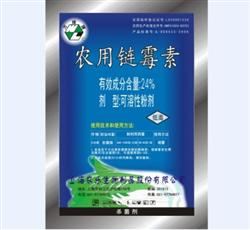
How are agricultural fungicides applied? Here are the methods
Agricultural fungicides are chemical agents that can directly kill the spores and mycelium of fungi or bacteria, or inhibit the growth and development of pathogens.
1. Agricultural fungicides must be used before crop diseases occur or in the early stages of disease
Fungicide use differs from insecticide and acaricide use. The principle of insecticides and acaricides is to kill insects when insects are seen and kill mites when mites are seen, that is, only when the insect population or mite population per unit area reaches a certain number can control achieve relatively satisfactory results. Fungicides are not like this. The principle of fungicide use is to give priority to prevention, with control as a supplement, that is, active control should be carried out before pathogens cause damage or in the early stages of damage. If control is carried out only after the disease has already caused damage or resulted in harm, even if the best fungicide is used, the effect will not be satisfactory. Sometimes it may even reach a level that is difficult to control, causing reduced fruit tree production or total crop failure.
2. Types of fungicides
There are two types of agricultural fungicides: protective fungicides and systemic fungicides. Protective fungicides only protect fruit trees and have no therapeutic effect, while systemic fungicides can kill the pathogens that have invaded and play a therapeutic role, with an unclear protective effect. Protective fungicides prevent disease invasion. After spraying, they form a protective film on the tree surface to prevent pathogens from contacting the leaves. But when pathogens have already invaded and are in the incubation stage, protective agents do not work. Therefore, protective fungicides are best used before disease occurs or in the early stages of occurrence. Systemic fungicides kill diseases that have already invaded and are most effective when used in the early stages of disease occurrence. When disease occurs severely, even if systemic agents are used, even with more applications, the effect will not be very good, and it will have a certain impact on tree growth and fruit. Therefore, to control diseases, they must be used before disease occurs or in the early stages of occurrence.
3. Several precautions
(1) When preparing fungicides, care should be taken to mix the liquid evenly. Fungicides are generally divided into wettable powders, powders, suspension concentrates and other formulations. For suspension concentrates, generally part of the water is first poured into the spray tank, then the amount of agent needed for the desired concentration is added, stirred and mixed evenly, and then the required water is added to the full amount. After stirring evenly, it can be used. This is even more so when using powders and wettable powders.
(2) The effect of fungicides is closely related to spray quality. Note that the liquid sprayed from the sprayer must be a mist rather than water droplets. Protective fungicides must form a protective film, and the front and back sides of leaves must be sprayed evenly and fully covered, so that the efficacy can be fully brought into play. Otherwise, a large number of pathogens will invade, and the purpose of disease prevention will not be achieved.
(3) In the process of agricultural control, people often mix fungicide and insecticide liquids together to achieve integrated control and save labor and time. With long-term use of systemic fungicides, pathogens are prone to developing resistance, so they should be used in combination with mancozeb, inorganic sulfur, etc., to delay the development of pathogen resistance to systemic formulations. When fungicides are mixed with insecticides, acaricides or other fungicides, it is also necessary to check the physical and chemical properties of these agents to see whether chemical reactions will occur, so as to avoid affecting efficacy. For example, mancozeb cannot be mixed with copper formulations, mercury formulations or strongly alkaline pesticides, and lime sulfur mixture cannot be mixed with copper formulations such as Bordeaux mixture, mechanical oil emulsions, and pesticides that easily decompose under alkaline conditions. If they must be used in production, there should be a certain safe interval when applying them, generally an interval of 7-10 days.
Click to get more fungicide application techniques
Click to get more pesticide application techniques