No drug can cure corn viral disease; controlling pests to prevent the disease is crucial
In recent years, the areas affected by corn viral disease have expanded, with severe damage in some regions, causing a serious impact on corn production. Corn viral disease is divided into two types: dwarf mosaic disease and rough dwarf disease, with dwarf mosaic disease being the main one. The transmission vectors of corn viral disease are insects such as aphids, thrips, and small brown planthoppers. Once the disease occurs, there is no drug that can cure it. The corn varieties currently planted are basically all susceptible to viral disease, so comprehensive control is mainly carried out through "controlling pests to prevent the disease" by managing the virus-transmitting insects.
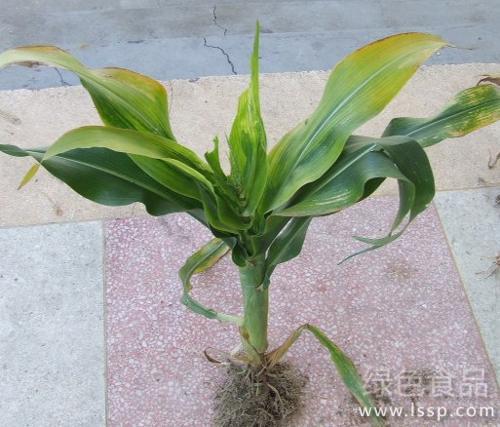
Corn viral disease
Symptoms and occurrence patterns:
After corn is infected, circular chlorotic spots first appear between the veins at the base of the new leaves of the seedlings, gradually spreading to the entire leaf and appearing as a mosaic pattern. The plants become dwarfed, and severely affected corn plants cannot tassel or set seed, and they age prematurely and die. Corn can be infected throughout its entire growth period; corn before the 5-leaf stage is susceptible, resistance increases after the 10-leaf stage, and damage is most severe at the seedling stage. In affected fields, spring corn suffers more severe disease than summer corn, intercropped and relay-cropped fields suffer more than direct-seeded fields, and disease is severe when vegetable fields are converted to corn. Corn near field edges, vegetable plots, orchards, roadsides, canal edges, and low-lying areas suffers severe disease, and corn in plots with extensive management, overgrown weeds, low soil fertility, and weak emergence is also susceptible.
Control methods:
When corn is infected, agricultural control should be the main approach, supplemented by chemical control. The core is to control the virus source, reduce the insect source, and avoid damage.
1. Select disease-resistant varieties.
2. Sow corn at an appropriate later date, so that the corn seedling stage avoids the peak activity period of the first generation of small brown planthoppers or aphids as much as possible.
3. Remove weeds to eliminate the virus source and virus-transmitting insects, and reduce damage.
4. Strengthen field management. In combination with thinning and final singling of seedlings, pull out diseased plants in the field and bury them deeply or burn them in a centralized manner to reduce sources of infection. Apply fertilizer and water scientifically and strengthen field management so that corn grows vigorously, shortens the susceptible period, reduces opportunities for virus transmission, and enhances corn disease resistance.
5. Chemical control.
(1) At the corn seedling stage, use pesticides as early as possible against small brown planthoppers, thrips, and aphids. A 10% imidacloprid wettable powder 3000-5000 times solution or a 25% buprofezin wettable powder 1000-1500 times solution can be sprayed evenly. Focus on treating plots along ditches, roadsides, and areas with many weeds, and pay attention to controlling intercropped and relay-cropped corn fields to reduce virus-transmitting insects.
(2) In the early stage of viral disease, spray a 20% Virus A wettable powder 400 times solution or a 1.5% Zhi Bing Ling emulsion 1000 times solution.
(3) Use systemic insecticides to dress corn seed. For example, use 25% pymetrozine 5 to 8 grams to make a mother liquor and dress 2 kg of corn seed (the amount of water used is preferably 50 grams per 1 kg of corn seed). Dry it in the shade before sowing. This can prevent damage from small brown planthoppers at the corn seedling stage and control corn rough dwarf virus.