Will neglecting post-harvest management of peach trees affect their growth, and how should management be done well?
At this stage, peaches have successively entered the picking period. After peaches are picked, some peach growers relax their management of peach trees, or even neglect management altogether, which will seriously affect the growth of peach trees in the current year and the abundant harvest in the coming year. Therefore, China Green Food Network suggests seizing the opportunity to do a good job of post-harvest management of peach trees.
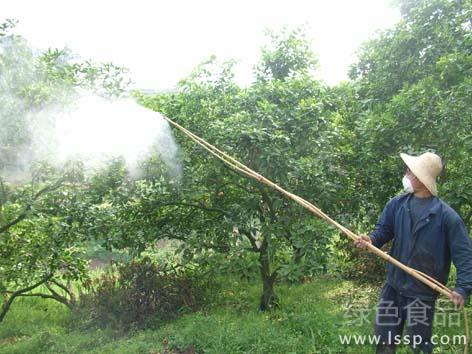
Post-harvest management of peach trees
1. Clearing the orchard:
After peaches are picked, the orchard should be cleared promptly. Rotten fruit, diseased and insect-damaged fruit, fallen leaves and weeds in the orchard should be cleaned up and taken outside the orchard to be buried deep, so as to eliminate the sources of spread of peach tree diseases and insect pests.
2. Topdressing :
During the peach growing period, a large amount of the tree's nutrients is consumed, resulting in a lack of nutrients in the peach tree, so nutrients need to be supplemented. Topdressing should be carried out promptly to restore tree vigor. After peaches are picked, it is exactly the nutrient accumulation period. Topdressing at this time can make the peach tree robust, with plump and well-filled flower buds, laying the foundation for an abundant harvest the following year. Topdressing is mainly based on livestock and poultry manure, straw and farmyard manure, with an appropriate amount of a three-element compound fertilizer with high nitrogen, medium phosphorus and low potassium, as well as trace elements such as iron, zinc and boron. For the topdressing method, the radial trench method can be used, and the length of the radial trenches should exceed the projection area of the peach tree. Foliar fertilizer can also be sprayed, such as a 1% urea solution, a 2% potassium dihydrogen phosphate solution, or an 800-fold Yongye Life Element solution, to extend the functional period of peach leaves and accumulate more nutrients.
3. Prevention and control of diseases and insect pests:
3.1 Aphids A 3000-fold solution of 10% imidacloprid, or a 1500-fold solution of 5% acetamiprid, can be used.
3.2 Red spider mites A 3500-fold solution of 1.8% abamectin, or a 1500-fold solution of 15% pyridaben, can be used.
3.3 Pear fruit borer A 2000-fold solution of 4.5% beta-cypermethrin, or a 4000-fold solution of emamectin benzoate, can be used.
3.4 Scab A 1500-fold solution of 50% carbendazim, or a 3000-fold solution of 12.5% diniconazole, can be used.
3.5 Bacterial shot hole disease A 500-fold solution of 30% Ludebao suspension concentrate, or a 500-fold solution of 65% zineb wettable powder, can be used.
4. Drought prevention and drainage:
In dry weather, water promptly. Peach trees are most afraid of waterlogging, so drain promptly during the rainy season.
5. Pruning:
Prune in time the current year's upright, water-sprout and crossing branches as well as diseased and insect-damaged peach branches, so as to reduce nutrient consumption, improve the ventilation and light transmission conditions of the peach tree, and enhance the ability of peach leaves to produce photosynthetic products.
6. Deep digging of the root zone:
In combination with topdressing, deep digging of the root zone can be carried out to break up compacted soil, increase permeability and promote the growth of the peach tree root system. Also, the insect pupae dug out should be sun-dried to death or fed to birds, so as to reduce the occurrence of insect pests on peach trees the following year.