Corn smut turns the ear into a black spore mass: how to prevent and control it
Corn smut, commonly known as wumi, is a major disease of corn. This disease is a bud-stage infection and a systemic infectious disease. The pathogen invades the young corn bud, then spreads to the seedling growing point and, as the corn plant grows, spreads throughout the whole plant. It generally shows typical symptoms at the ear stage of corn, mainly damaging the female and male ears of corn, and once the disease occurs, the plant often fails to set seed.
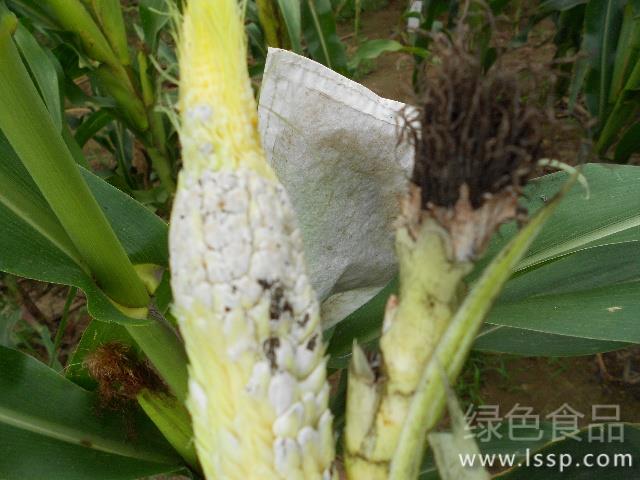
Corn smut
The symptoms of severely affected corn at the seedling stage are: increased tillering, forming a bushy type, with the plant markedly dwarfed, internodes shortened, and leaves dark green and upright; on some varieties, chlorotic yellow-white streaks parallel to the leaf veins appear on the leaves, and on some corn seedlings the heart leaves are tightly rolled together, twisted into a whip shape. Diseased ears of corn at the adult plant stage can be divided into two types. The smut type: the affected ear is relatively short, thick at the base and pointed at the tip, does not extrude silks, and except for the husk leaves, the entire ear becomes a black spore mass, mixed with thread-like host vascular bundle tissue. The malformed type: the male ear floral organs are deformed and do not form stamens, the glumes are leafy, and the glumes of the female ear may also overgrow into tubular long spines, appearing like a “hedgehog head”, with the entire ear deformed. Diseased plants in the field are mostly affected on both female and male ears at the same time.
Control methods
1. Choose disease-resistant corn varieties.
2. Adjust the sowing date and improve sowing quality. Appropriately delay the sowing date, and before sowing select and sun the seeds to improve the germination vigor of the corn seeds. Promote rapid emergence and strong seedlings, reduce the chance of the pathogen infecting young corn buds, and improve corn disease resistance.
3. Use plastic film mulching. Plastic film mulching can raise soil temperature, maintain soil moisture, accelerate corn emergence and growth progress, and reduce the chance of disease.
4. Pull out diseased plants and remove diseased galls to reduce the source of inoculum.
5. Chemical control. Treat corn seeds with chemicals before sowing; the most commonly used treatment is seed dressing, and 15% triadimefon wettable powder or 50% thiophanate-methyl wettable powder can be used at 0.3%-0.5% of seed weight for seed dressing. Alternatively, 12.5% diniconazole wettable powder or 2% tebuconazole seed dressing agent can be used at 0.2% of seed weight for seed dressing.