Tomato fruit cracking in the mid-to-late stages affects fruit appearance; how can it be prevented?
In summer and autumn, greenhouse tomatoes often develop fruit cracking during the color-turning stage, which affects their appearance. So how can fruit cracking be prevented in the mid-to-late stages of tomatoes?
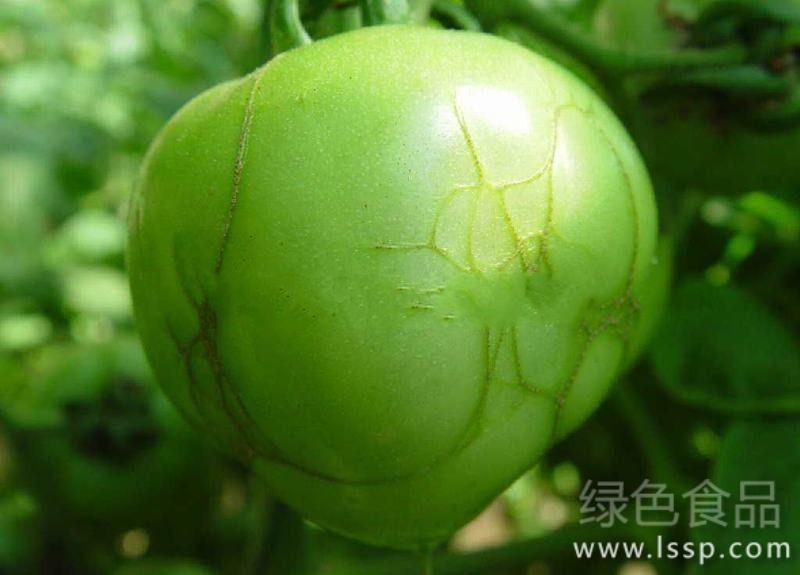
Tomato fruit cracking
I. Three types of fruit cracking:
1. Radial cracking. Centered on the stem scar and extending toward the shoulder, it forms deep radial cracks. It begins at the mature green stage of the tomato, with fine cracking lines appearing near the stem scar, and 2-3 days before color turning, the cracks become obvious.
2. Concentric cracking. With the stem scar as the center, it forms shallow concentric cracks, mostly appearing when the tomato ripens.
3. Stripe-like cracking. Irregular cracking stripes at the blossom scar area on the top of the fruit.
II. Causes:
1. It mainly occurs in the late development stage or color-turning stage of the tomato, when strong sunlight, high temperature and drought, or heavy rain are encountered, the growth of the tomato skin and the expansion of the flesh tissue are not synchronized, and the tomato's turgor pressure increases, causing fruit cracking. Especially when showers or heavy rain occur, the root system of the tomato plant develops physiological dysfunction, which affects the absorption and transport of water and nutrients, making fruit cracking likely.
2. If the plants are topped too heavily, and the tomatoes are suddenly watered after being exposed to the sun, fruit cracking is likely to occur.
3. Tomato fruit cracking is also related to the variety; thin-skinned fruits crack easily, while thick-skinned fruits do not crack easily.
4. A lack of trace elements such as calcium and boron can cause corky cracking on the tomato fruit surface.
III. Preventing tomato fruit cracking
1. Tomato varieties with strong cracking resistance should be selected.
2. Field management should be strengthened. Water at the right time and to an appropriate degree to prevent the soil from being too dry, too wet, or alternating between dry and wet. After rain, clear the ditches, drain water, and reduce humidity. Apply more organic fertilizer and high-quality biological fertilizer to improve soil structure and provide good environmental conditions for tomato root growth. Frequently spray fertilizers such as calcium and boron. Prune and remove side shoots appropriately, keep the tomato plants with luxuriant leaves, strengthen the transpiration of excess water, and avoid nutrients being concentrated in supplying the tomatoes and causing fruit cracking. Use plant growth regulators correctly; when spraying flowers with hormones, the concentration must not be too high, and the concentration should be reasonably determined according to the tomato variety and temperature. During the tomato expansion stage, spray foliar fertilizers such as calcium chloride and zinc sulfate at the right time to improve nutrition and enhance the tomato's cracking resistance. Spraying 27% high-lipid membrane emulsion at 100 times dilution is also effective.