July apple tree management key points: the fruit enlargement stage coincides with a period of high pest and disease incidence
July is the peak period of flower bud differentiation and rapid fruit enlargement in apple trees, and also a period of high pest and disease incidence; apple tree management during this period is especially important, and the key points are summer pruning, pest and disease control, topdressing, weed control and drainage.
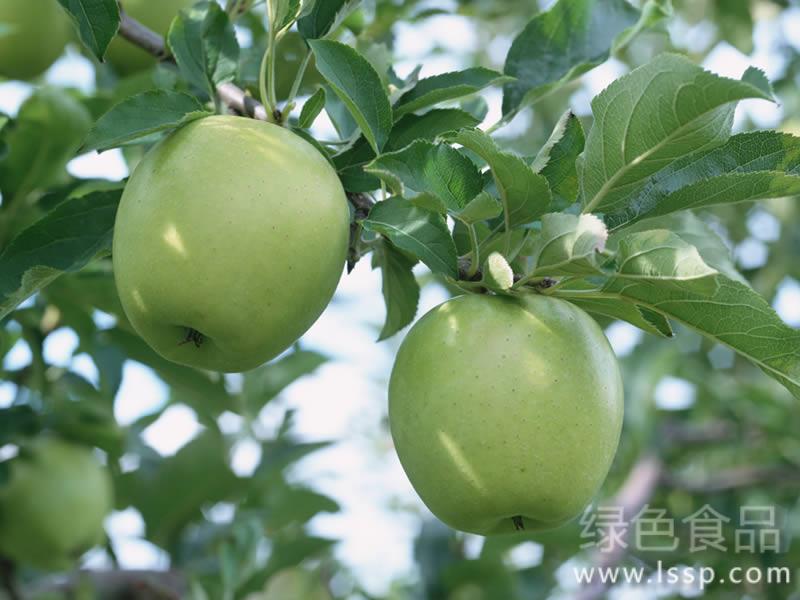
Apple tree
I. Summer pruning:First, for vigorous and water-sprout branches, bend them and open up the branch angle to moderate the growth vigor; second, some vigorous branches that block light need to be thinned out; third, the middle part of spring shoots and the blind node areas of spring-autumn shoots or the middle part of autumn shoots need to be cut back to promote autumn secondary shoots, form flower buds and produce high-quality fruiting branch groups; fourth, for apple trees that bear too much fruit and whose fruiting parts have moved outward, use branch props and ties to prevent branch breakage, avoid apples clustering together, and benefit apple growth, development and coloring; fifth, pinch the tips of vigorous shoots to promote short branch formation and flower bud formation.
II. Pest and disease control:If a "summer drought" occurs, red spider mites easily break out and cause severe damage, and 24% spiromesifen 2500x solution can be sprayed; in apple orchards with severe woolly apple aphid infestation, remove infested shoot tips and spray a mixture of 48% chlorpyrifos EC 1000-1500x + 25% imidacloprid suspension concentrate 2000-3000x + Roushuitong 4000x; at the initial occurrence stage of leaf roller moths and leafminer moths, choose to spray 25% chlorbenzuron suspension concentrate 1000-1500x, or 40% triflumuron suspension concentrate 6000-8000x; for peach fruit borer, when the egg-fruit rate reaches 0.5%-0.8%, spray on the tree, with commonly used pesticides including 20% fenpropathrin EC 2000x, 5% cyhalothrin EC 2500x (also controls pest mites), etc., focusing spraying on the fruit surface; continue manual capture and killing of leaf roller moths, pear caterpillars, cicadas, mulberry longhorn beetles and citrus longhorn beetles; in rainy seasons, depending on the situation, spray 43% tebuconazole 2500x + 80% mancozeb 1000x, or 50% copper quinolinate 2500x + rare earth fertilizer 2500x 1-2 times. For control of brown spot disease, alternaria leaf spot, anthracnose; black light insect traps, yellow sticky traps, and sex pheromone lures for lepidopteran pests can also be set up to trap and kill pests.
III. Topdressing:In mid-to-late July, apply apple enlargement fertilizer, which helps promote new root growth, improve leaf function, increase single fruit weight, improve apple quality and yield, plump flower buds and tree nutrition, improve tree resistance, and lay a good foundation for a bumper apple harvest that year and a good harvest the following year. Generally, apply 10 kg of Juhai® biological potassium per mu of apple orchard, combined with two foliar sprays of Juhai® compound microbial inoculant. At this time, the new shoots of apple trees stop growing and new flower buds begin to differentiate, which is beneficial for apple enlargement and flower bud differentiation and effectively prevents the occurrence of ring rot, anthracnose, leaf blight and brown spot disease.
IV. Weed control:In July weeds grow vigorously, competing for fertilizer and water, affecting ventilation and light penetration in the apple orchard, and breeding pests and diseases, so timely cultivating and hoeing are needed. Vigorous green grass inside and outside the orchard, along ditches, orchard edges and roadsides can be mowed and pressed under the tree canopy. Apple orchards planning to implement artificial grass growing can sow during the rainy season. For apple orchards that have already implemented artificial grass growing or natural grass growing, when the grass grows to 20-30 cm high, it should be mowed in time. It is recommended to cover the apple orchard with grass-source materials such as crop straw or weeds, which not only reduces pest and disease breeding, but also lowers temperature, retains moisture and improves the soil.
V. Drainage:July is the rainy season, with frequent and heavy rainfall, so flood control and drainage, soil and water conservation, and wind protection are needed. In the rainy season, the soil has much water and poor aeration, which inhibits the growth and absorption of apple tree roots. Flatland apple orchards can use the "ridge cultivation" management technique, that is, take 10 cm of topsoil from between rows and press it onto the rows, so that the ground between rows and within rows forms a height difference of about 20 cm, increasing the topsoil layer under the canopy, which can store and retain water, drain and prevent waterlogging, promote nutrient absorption, and avoid water accumulation causing waterlogging and inducing root diseases in apple trees. For waterlogged apple trees, expose the root crown by removing soil and drying it, so as to help the root system recover as soon as possible.