Melon cracking affects fruit appearance, how should it be prevented?
Melon cracking is a physiological disorder that occurs frequently in melons nearing maturity. When it occurs, large and deep cracks appear on the melon surface, and the cracked areas gradually rot and deteriorate, spreading outward. Cracked melons rot completely before ripening, and even if some ripen, their storage period is greatly shortened, quality is reduced, yield decreases, and sales and prices are affected. Therefore, management needs to be strengthened to create an environment favorable for melon growth and prevent fruit cracking.
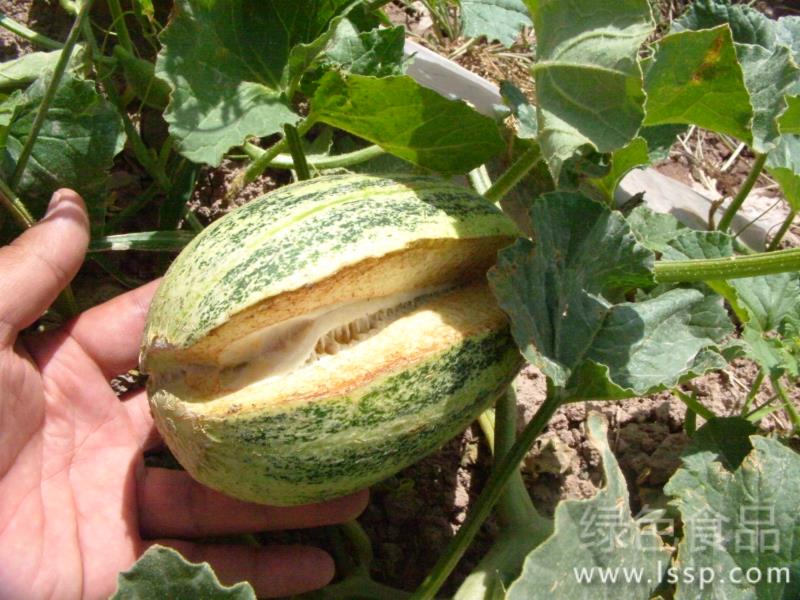
Melon cracking
I. Causes of fruit cracking
1. In the early stage of melon expansion, insufficient fertilizer and water caused the melon to expand slowly, and the rind aged and hardened. In the later stage, with sufficient fertilizer and water, the melon flesh expanded rapidly, but the rind had already aged. When the flesh burst through the skin, the melon cracked.
2. When melons are exposed to sunlight, the rind ages, hardens and contracts, producing concentric circular cracking patterns on the melon surface.
3. Too much watering in the later stage leads to large water uptake, the flesh absorbs water and swells, and since the rind has already aged and has poor flexibility, the melon cracks.
4. In the later stage after fruit set, temperatures below 15°C, large ventilation openings when ventilating, and large day-night temperature differences can all cause fruit cracking.
5. Deficiency of calcium, boron, etc. in the soil easily leads to fruit cracking.
II. Prevention methods
1. Supply fertilizer and water in a balanced way. According to the fertilizer and water requirements of melons, supply fertilizer and water evenly, and do not water and fertilize blindly. When fertilizing, apply sufficient base fertilizer to meet the needs of melons in the early growth stage, and in the later growth stage, topdress in time to meet the fertilizer requirements of melons in the later stage. When watering, water well for fruit expansion to promote melon swelling. After watering for fruit expansion, do not apply large amounts of water. Especially about 10 days before harvest, try not to water to prevent fruit cracking.
2. Protect the leaves. Take care to protect the leaves near the melon that shade it from sunlight, so as to avoid rind aging and fruit cracking caused by sunlight exposure.
3. Control temperature. In greenhouse production, take insulation measures to keep the greenhouse temperature above 15°C; when ventilating, first open a small opening, then gradually open it wider as the temperature rises; when a cold snap suddenly occurs, add insulation materials such as straw mats to prevent a sudden temperature drop.
4. Spray trace elements. After fruit set, combined with watering, spray the melon foliage with 0.3% calcium chloride and 0.12%-0.25% boric acid solution, spraying once every 7 days for 2-3 consecutive sprays, to supplement the deficiency of trace elements.