Correct Usage Methods to Improve Fungicide Efficacy
How can fungicide efficacy be improved? Please explain the methods for enhancing efficacy. To improve fungicide efficacy, you can use the following methods: Reasonably prepare the concentration. Different fungicides have special requirements for their use concentration. When preparing the concentration, you must strictly follow the "instructions for use" and must not arbitrarily increase or decrease it....
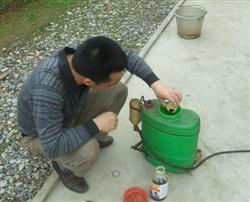
How can fungicide efficacy be improved? Please explain the methods for enhancing efficacy
To improve fungicide efficacy, you can use the following methods:
Reasonably prepare the concentration. Different fungicides have special requirements for their use concentration. When preparing the concentration, you must strictly follow the "instructions for use" and must not arbitrarily increase or decrease it.
Choose the correct spraying time. Spraying fungicides too late or too early will affect the control effect. Medication should be applied in a timely manner according to the occurrence patterns and specific conditions of different crop diseases. It is usually best to use it before disease onset (protective application) or in the early stage of disease onset (preventive measures).
Master the number of applications. The number of fungicide sprays is mainly determined by the length of the pesticide's residual effect period and weather conditions. Generally, spray once every 10-15 days, for a total of 2-3 times. In special circumstances, such as rain after application, promptly apply one additional spray.
Improve application quality. The amount of pesticide used should be appropriate. Using too much will increase costs and easily cause phytotoxicity, while using too little will fail to achieve the purpose of application. The quality of application should be emphasized. When spraying, the spray should be uniform, and every effort should be made to avoid missing any areas.
Strictly prevent phytotoxicity. There are many reasons why fungicides cause phytotoxicity. First, pesticides with relatively strong water solubility generally easily cause phytotoxicity. Second, different crops also have different sensitivities to pesticides. For example, Bordeaux mixture generally does not cause phytotoxicity, but it can also cause phytotoxicity to copper-sensitive crops. Legumes, potatoes, and cotton (18750,20.00,0.11%) are sensitive to lime sulfur mixture. Furthermore, different growth and development stages of crops also respond differently to pesticides. Generally, seedlings and the booting and flowering stages are prone to phytotoxicity. In addition, under conditions such as high temperature and drought, strong sunlight, heavy fog, or high humidity, pesticide application generally easily causes crop phytotoxicity.
Be cautious with pesticide mixing. Many fungicides are alkaline pesticides, so they cannot be mixed with insecticides that easily decompose and become ineffective when encountering alkaline substances, such as Bordeaux mixture and lime sulfur mixture, which are alkaline. There are also some fungicides, such as carbendazim, that cannot be mixed with fungicides such as Bordeaux mixture, lime sulfur mixture, and thiophanate, as this will likewise cause the insecticidal (fungicidal) microorganisms to lose their physiological activity and insecticidal (fungicidal) ability, thus becoming ineffective.
Pay attention to avoiding pesticide resistance. The use of fungicides also involves the problem of crop disease resistance. To avoid disease resistance, on the basis of scientifically selecting pesticides, effectively carry out alternating (rotational) use of different types of pesticides, and strictly prohibit the long-term single use of one pesticide.
Click to get more fungicide application techniques
Click to get more pesticide application techniques