How should green mold infection in oyster mushrooms be prevented and controlled when it affects production?
Green mold, also called green Trichoderma, severely damages oyster mushroom production. Oyster mushrooms at different stages can all suffer from its damage. Once the disease occurs, it causes reduced yield in mild cases and total crop loss in severe cases, restricting oyster mushroom production.
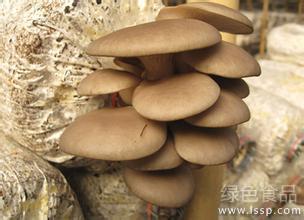
Oyster mushroom green mold
I. Symptoms:The disease is likely to occur in spawn bottles, in mushroom blocks after spawning, and on old roots not thoroughly picked off after fruiting, producing green colonies that spread, compete with oyster mushrooms for nutrients, and secrete toxins that affect oyster mushroom mycelial colonization and fruiting body formation. After mushroom harvesting, the mushroom roots are easily damaged; after the culture blocks are infected, green colonies grow and spread rapidly, causing poor growth or death of oyster mushroom mycelium or fruiting bodies.
II. Prevention and control methods:
1. Do a good job of disinfecting the mushroom house: thoroughly disinfect the oyster mushroom house and eliminate all kinds of debris. Seal wall cracks with lime or yellow mud. Brush walls, roof, and bed frames with 10% fresh limewater, spray the floor and roof with Lysol, then scatter quicklime powder, and finally fumigate and disinfect with 10ml/m3 formaldehyde plus 5g/m3 potassium permanganate vaporized. During the oyster mushroom cultivation period, regularly spray 0.1% potassium permanganate or 3%-5% carbolic acid.
2. Select excellent spawn: for oyster mushroom spawn, choose spawn with dense, white, thick mycelium, strong resistance to contaminating organisms, no contamination, and of suitable age.
3. Select high-quality culture material: the culture material must be fresh and uncontaminated. About 2% lime, 1% gypsum, and 0.1-0.2% carbendazim can be added to the mixture, and green mold growth is inhibited. If the oyster mushroom culture material is not fresh or has already become moldy, it must be treated by high-temperature fermentation before reuse.
4. Strengthen cultivation management: in the early stage of oyster mushroom cultivation, the mushroom house temperature should not be too high, and the humidity should be about 70%, which is not favorable for mold growth but does not affect oyster mushroom growth. During cultivation, the amount of spawn used can be increased, with the spawn amount accounting for 10-15% of the dry material weight, so that oyster mushroom mycelium forms a growth advantage in a short time. During the cultivation process, ventilate and exchange air appropriately and control the mushroom house environment to favor mycelial growth and inhibit green mold.
5. Chemical control: when there is a small amount of green mold at the two ends of the culture material or spawn bags, apply or spray 0.1% thiophanate-methyl, 0.1-0.2% zineb, 0.1%-0.2% carbendazim, or the clear supernatant of concentrated limewater on the affected parts of the oyster mushrooms to prevent conidia from spreading, or treat the infected parts of the oyster mushrooms with a mixed solution of 2% formaldehyde and 5% carbolic acid to inhibit contaminating microorganism growth. If the green mold has already penetrated deep into the material, cover it with gauze soaked in 0.2% carbendazim solution, then gently dig out the contaminated material blocks, spray 0.2% carbendazim or other fungicides on the material surface after digging, or apply concentrated lime milk, then fill it level with fresh material or spawn to control its development. Spawn bags with severe contamination can be deeply buried for disposal. During the oyster mushroom fruiting period, 70% thiophanate-methyl, or 50% carbendazim 1000-fold solution, or 10% liquid shuangxiaoling can be sprayed once every 3-5 days, with good control results.